Architectural Systems: Dr Karen Doherty’s Cult New Clinic
Words by Hannah Nixon
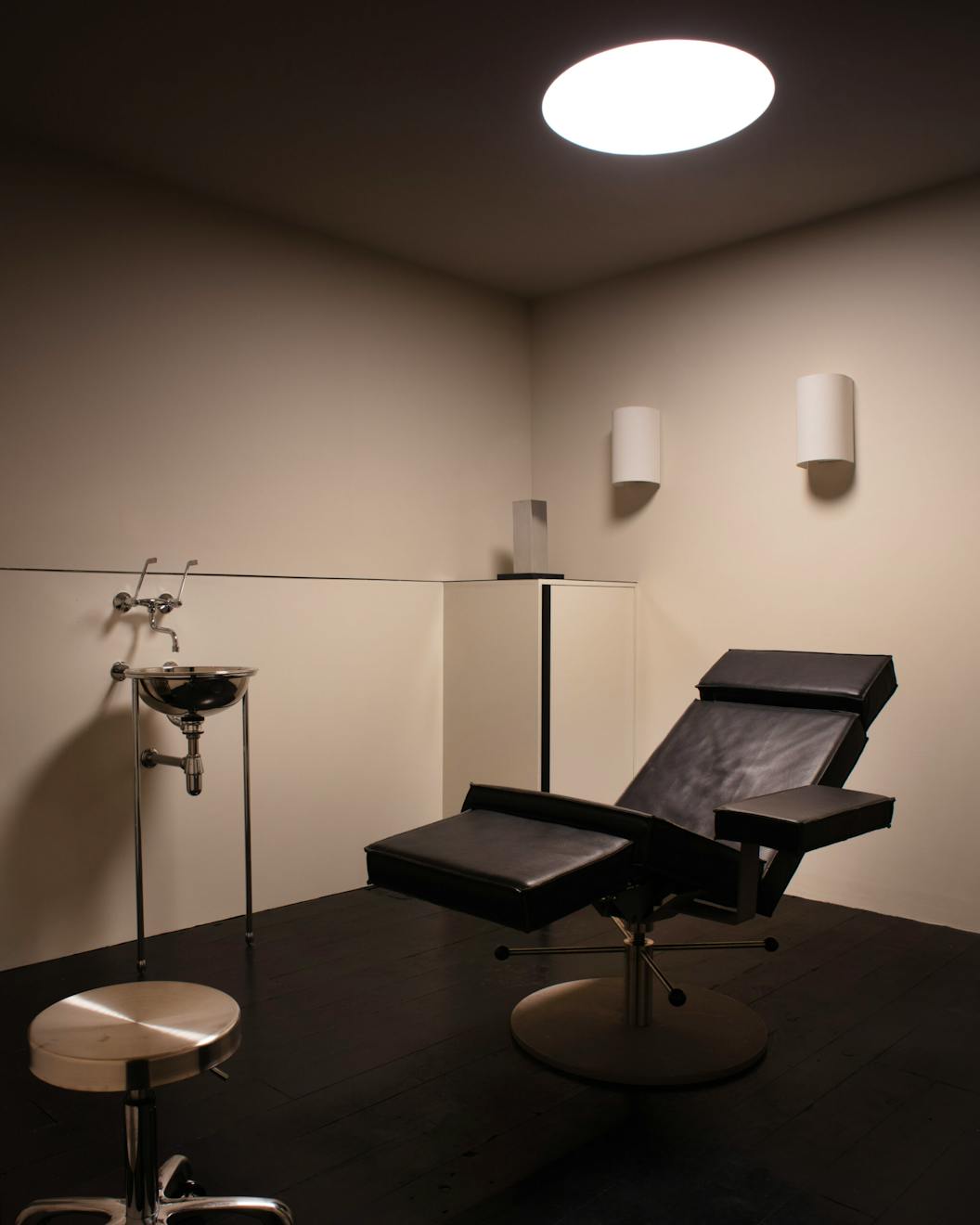
Discretion is the byword for beauty insider’s aesthetician Dr Karen Doherty. Having run her clinic from her Stoke Newington home for the past two years, her high profile clients were well-versed in not only her tactful handling of their privacy but also her exceptional taste, which veers towards brutalist artifacts and post-modernist design. Far from a sterile, bleached-white doctor’s office, her aesthetic language has evolved through an ongoing dialogue with Max Radford, who runs the Max Radford Gallery as well as an interior design studio. Having collaborated with Karen on sourcing pieces for her home, Max was the perfect partner to help develop her vision when she secured a space just off Redchurch Street in Shoreditch.
We spent the morning with Karen and Max exploring the cavernous clinic that takes its cues from the steely restraint of ’70s Italian design. Max walked us through the space while Karen finished up with a client and we discussed how together they radically reimagined what a doctor’s surgery can be.
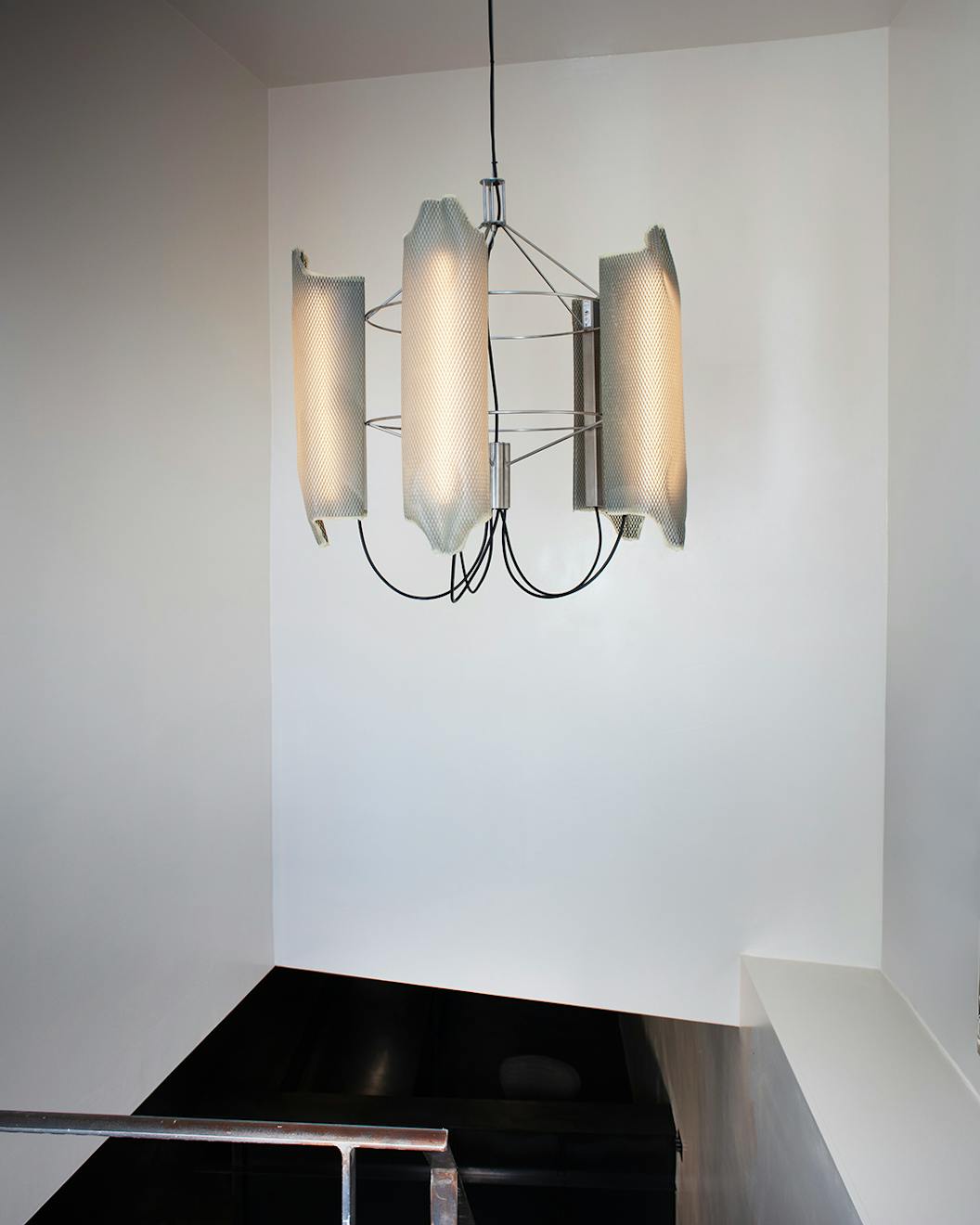
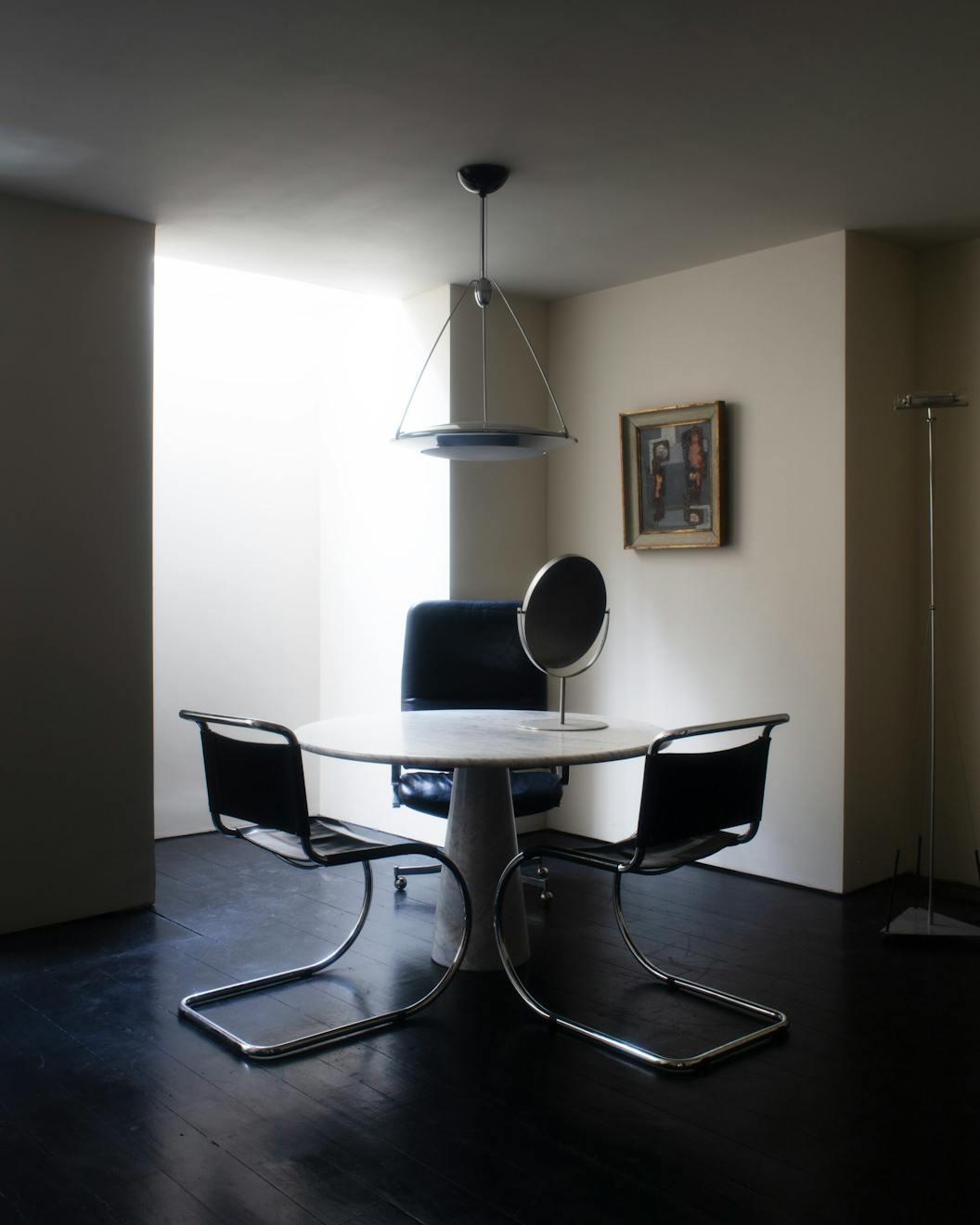
Max: It’s a bespoke pendant from LS Gomma. He’s someone we’ve worked with at the gallery for quite some time and we commissioned this double stack pendant for the space. Karen collected a few of his pieces before and was a fan. It’s polyurethane with wire mesh running through it and the framing is stainless steel. All the framing is by the same fabricators in the Midlands he’s been using for the past 10 years. They’re all in the 70s now and they do all the rubber and mesh work themselves. The wire mesh is dipped in liquid polyurethane as it’s curing and shaped, so there’s still some movement.
Max: In many ways, lots of the pieces in here are in the designs for Karen’s house. A lot of the defining the style of Dr Karen Doherty [the space] was already beginning at the house before we moved here because she’d been running the practice from her home. Her clients were already used to that look of 20th century classics mixed in with contemporary radical design.
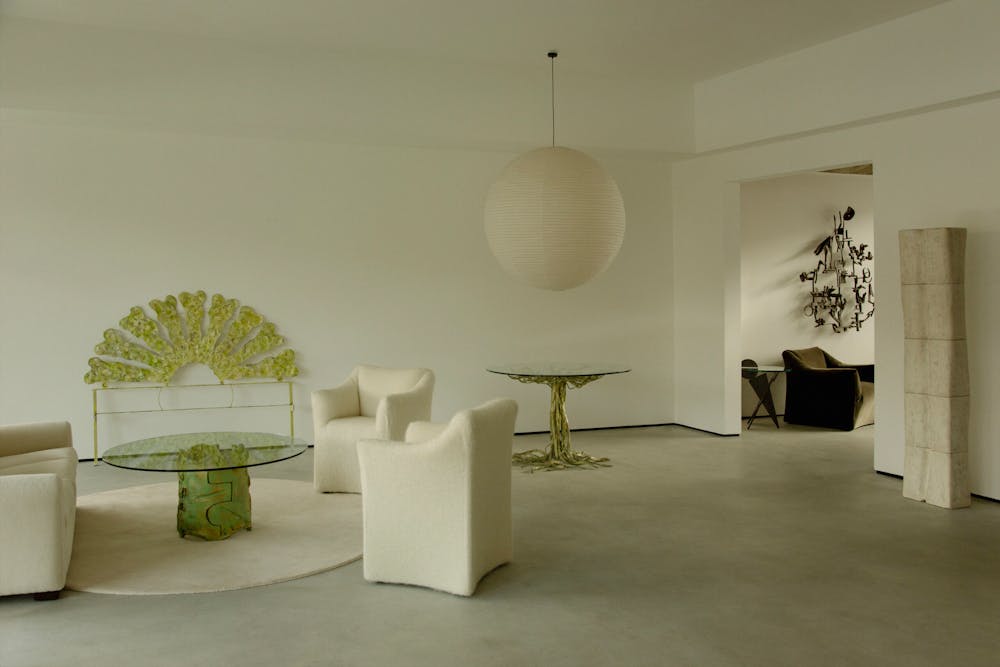
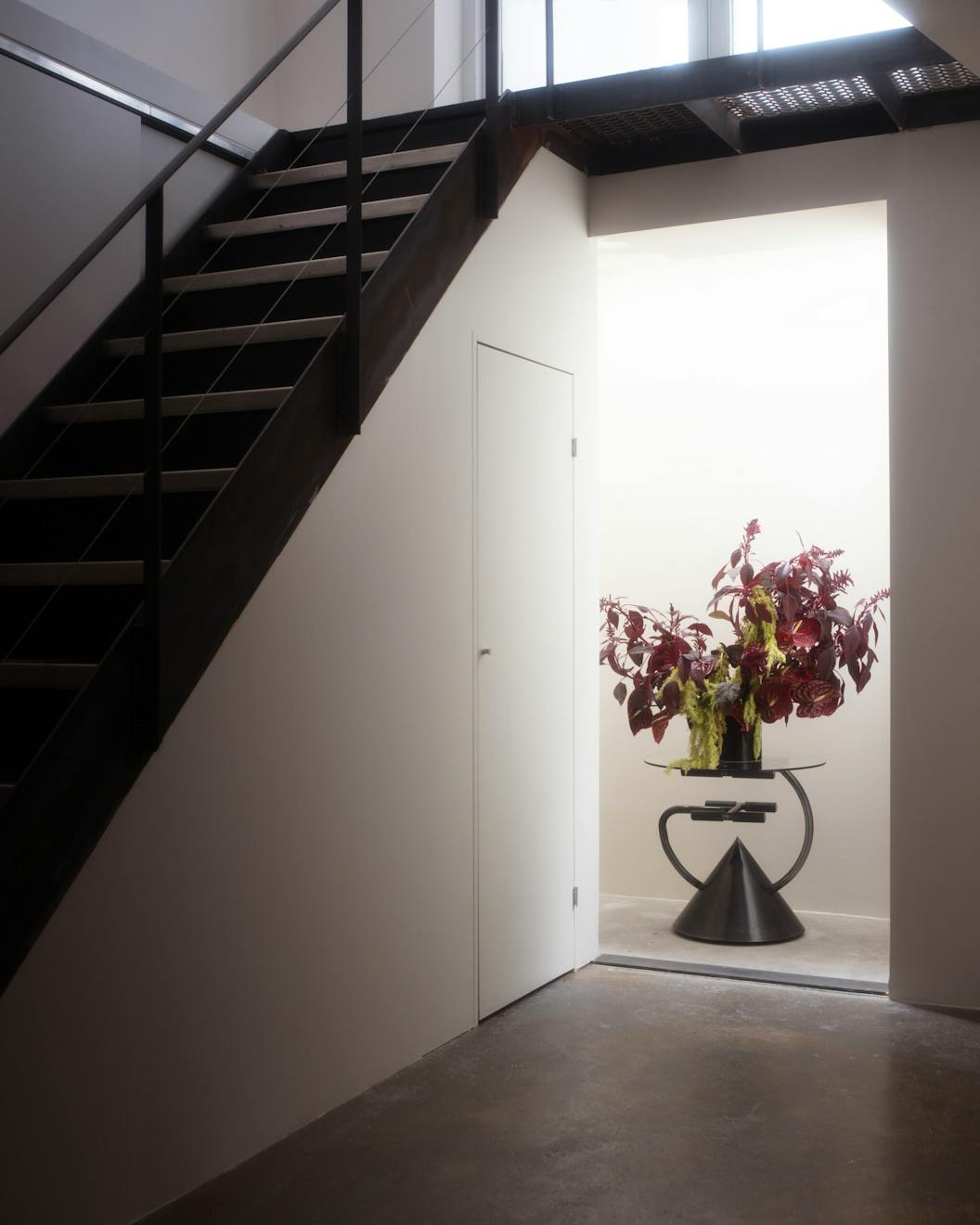
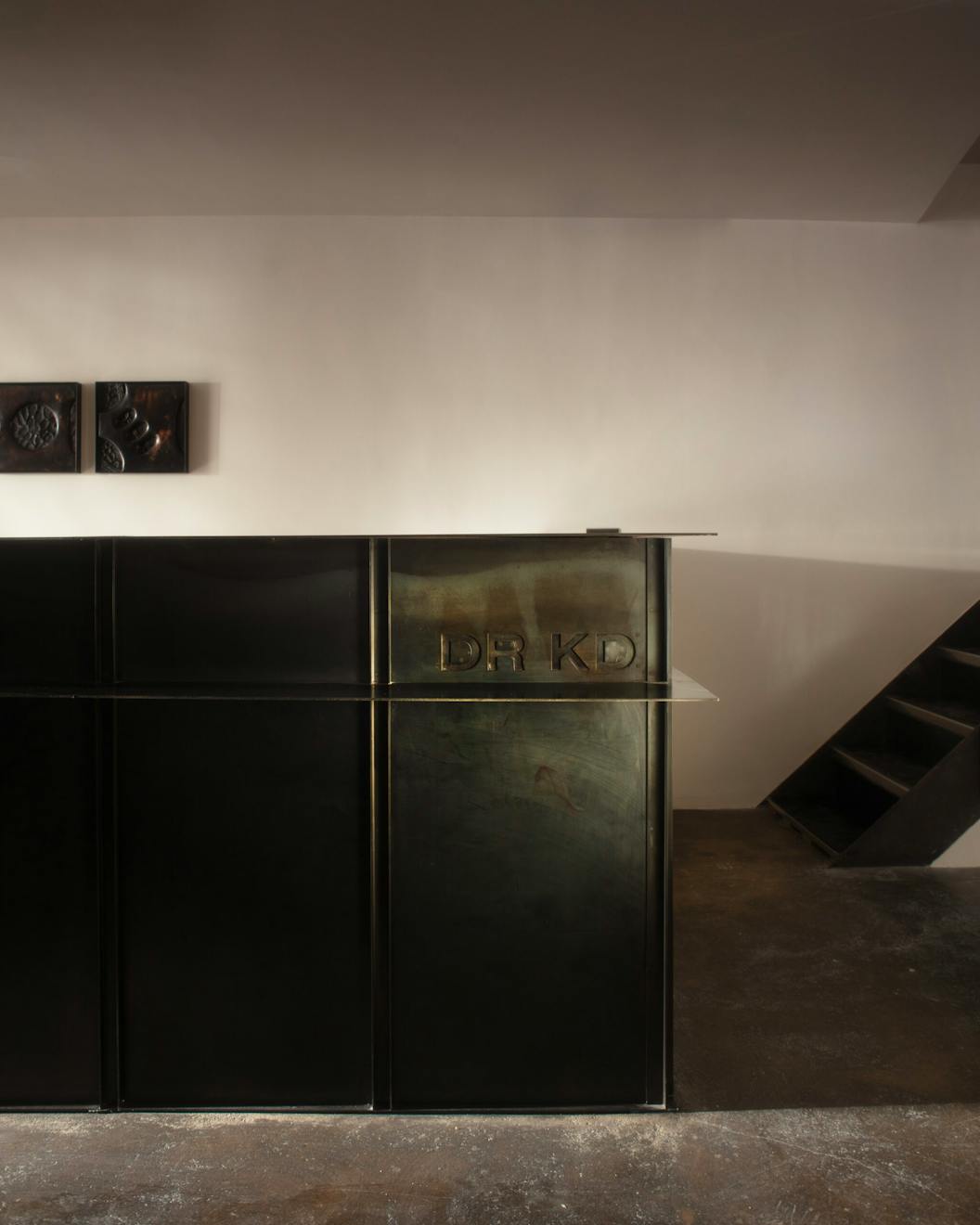
Max: Yeah, the starting points for the interior were ‘60s and ‘70s Italian radical design, very clean, lots of straight lines, lots of architectural systems. That’s now through the space, it’s felt in all this black and steel detailing.
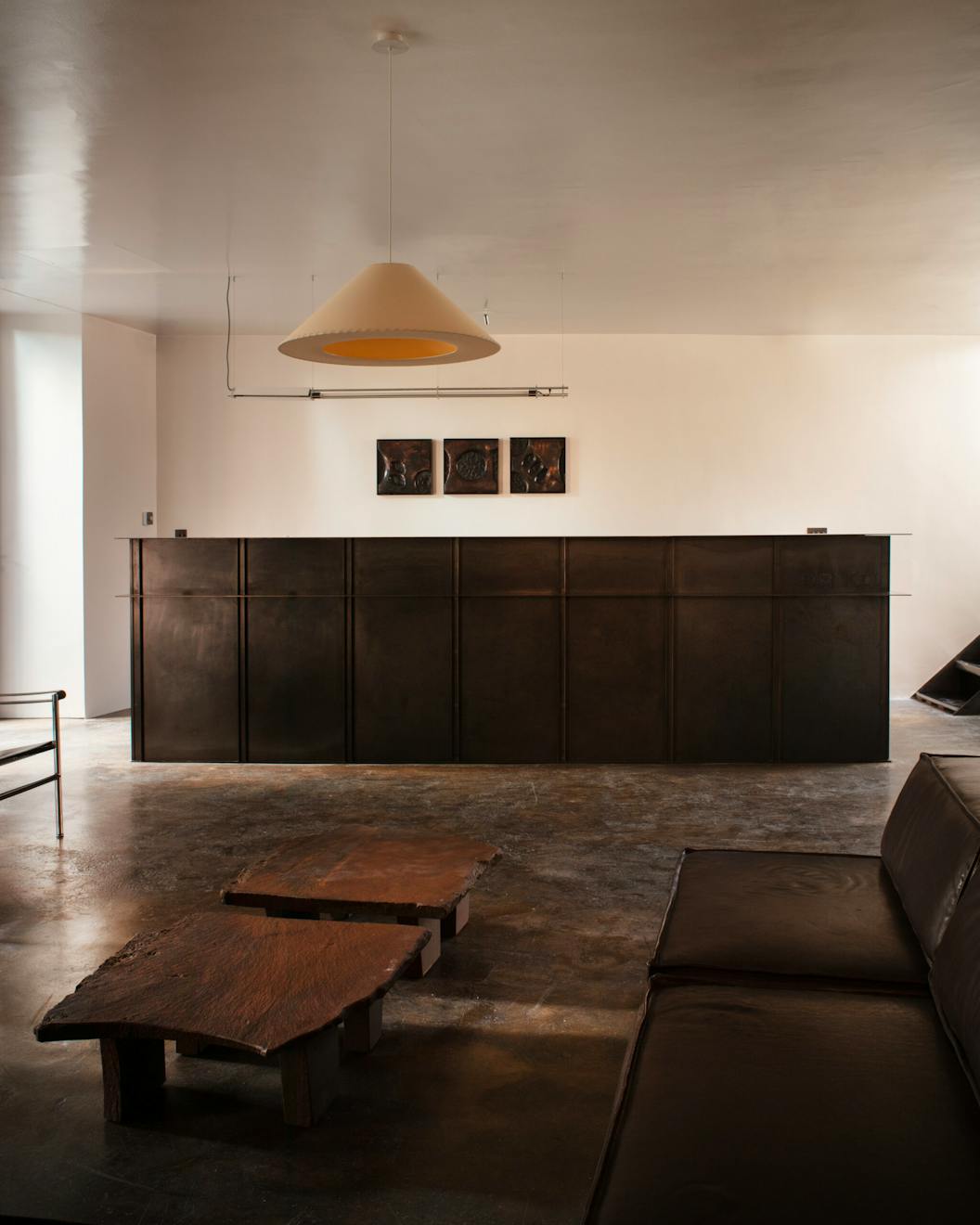
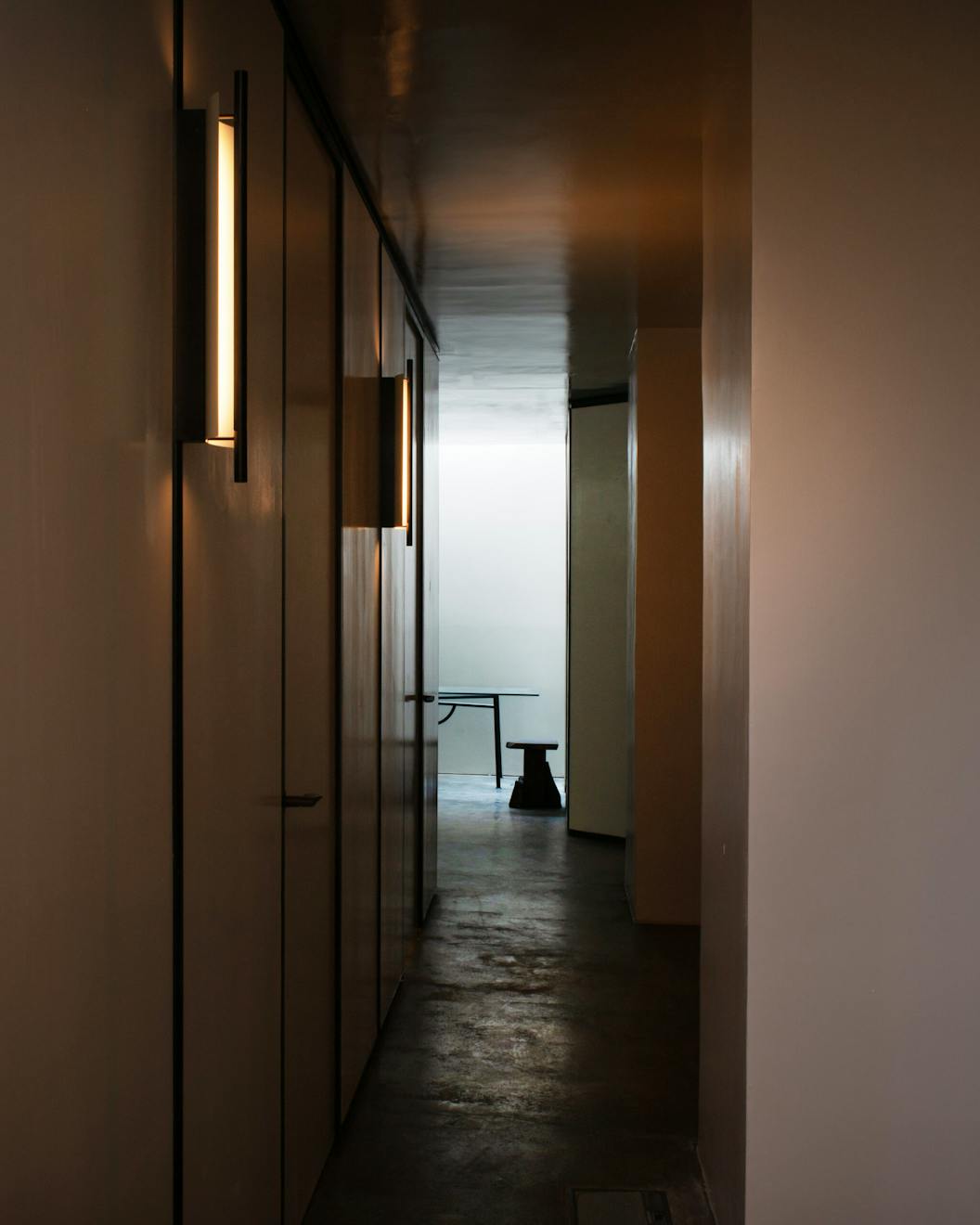
Max: It’s based on Italian rationalist architecture and how that was transposed into interior design in the ‘60s/’70s by Carlo Scarpa, etc. Their exhibition design was about creating modular systems that were able to lay out space in a particular way. We borrowed that idea of a system to create the divisions for this space. You have a rhythm running through, meaning that you can have very strong architectural details without having to dress the space too much.
Max: We tried to tonally mix up the leathers a bit, so the chairs are in black leather and then the sofa is in a dark brown. The floor is just a cast concrete floor. We are sort of blessed with it being quite patchy. We were aiming for a fully formed space when it dropped rather than something that needed to age in.
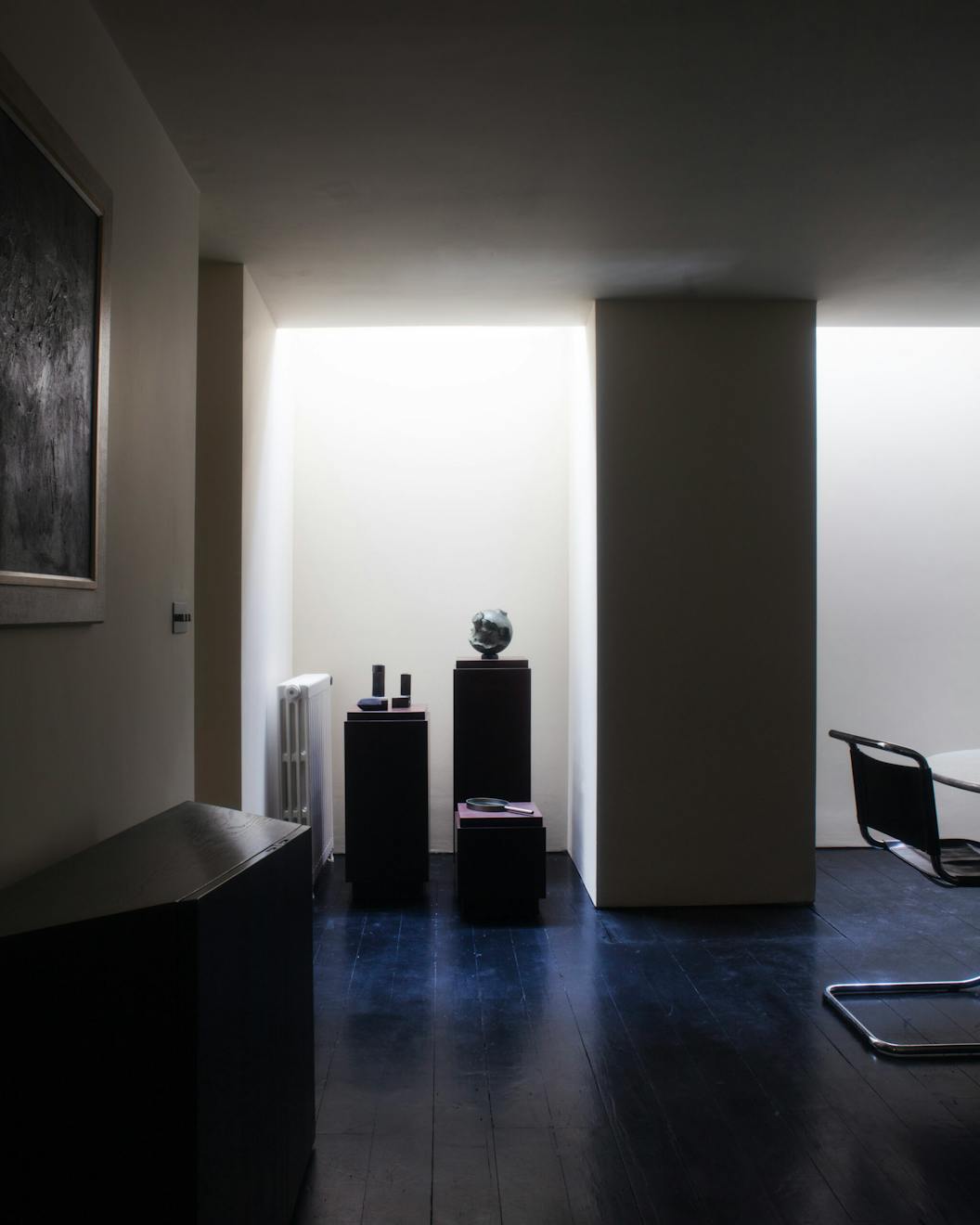
It’s almost like a gallery setting for all these beautiful things to be read as what they are rather than merging into the background.
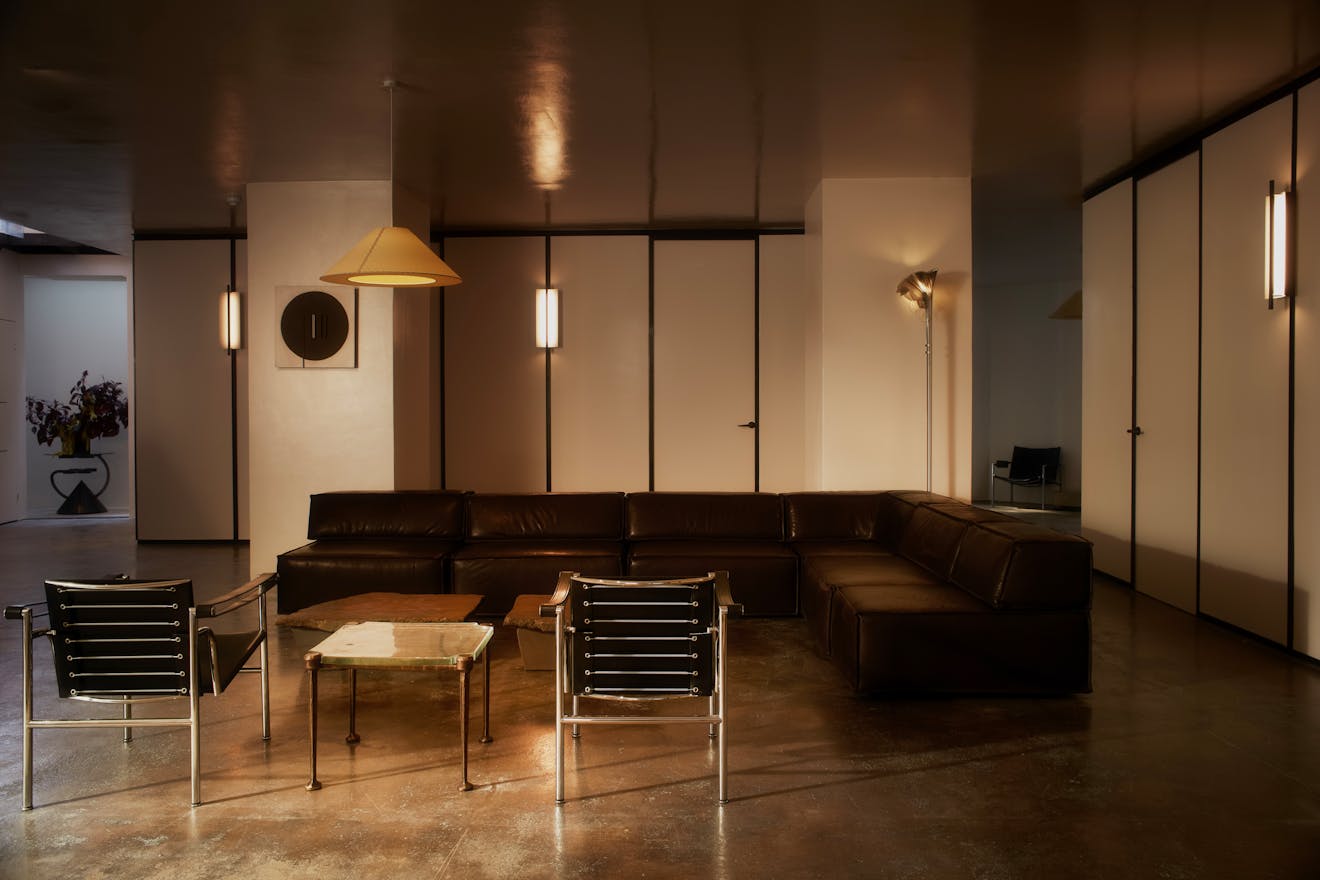
We’d present things to Karen. There were some things that were predetermined, like to have a massive sofa but we wanted it to be vintage. We would present a couple of options and say which one we think would be our favourite and four out five times we would just agree and which is fantastic.
Karen joins us having finished with her client.
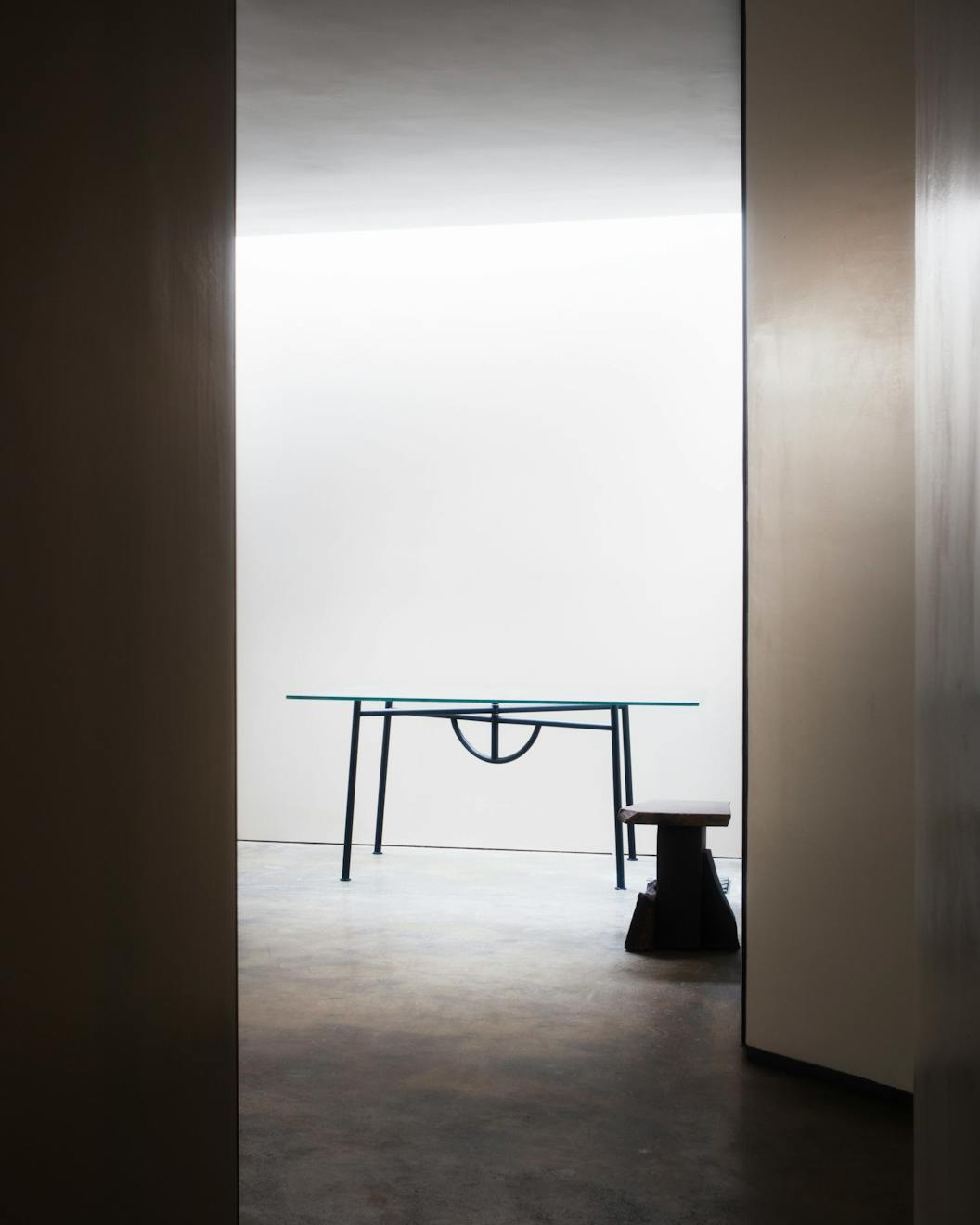
Karen: There were a few things that I liked about choosing the site. It’s got a separate exit, so that can be for any type for clients that don’t want to come in the front door, but even the front door itself, it’s quite discreet. Discretion is the thing. But for the brief, also, minimalism – less is more.
Karen: We were talking about putting curtains on the entrance to this [secondary waiting] space, but actually now we’re in we realised you can’t really see anything anyway because it’s all hidden.
Karen: We want to build a community around us and the integration of the more holistic services as well. I just want to make everything feel more accessible because there will be a lot of people who will be scared of what I do because of what the industry represents.
Karen: I’m much more focused on regenerative and holistic health. Any of the treatments I provide are based on patient safety – ‘what the long term is, and what is the science of what it’s actually doing?’ If it’s something that has a bad long term effect, which some of the aesthetic treatments do, it’s not something I’m going to offer.
Karen: Through a friend. We’d moved into our house and the real pivotal point for me was whenever I ordered a lampshade that I thought was going to go in the top bedroom, it turned up in a massive box and was far too big. I decided I need someone else to make these mistakes for me. We got Max to help with the house and this is just a fantastic natural progression.
Max: That was two, three years ago?
Karen: And I’ve been torturing him ever since.
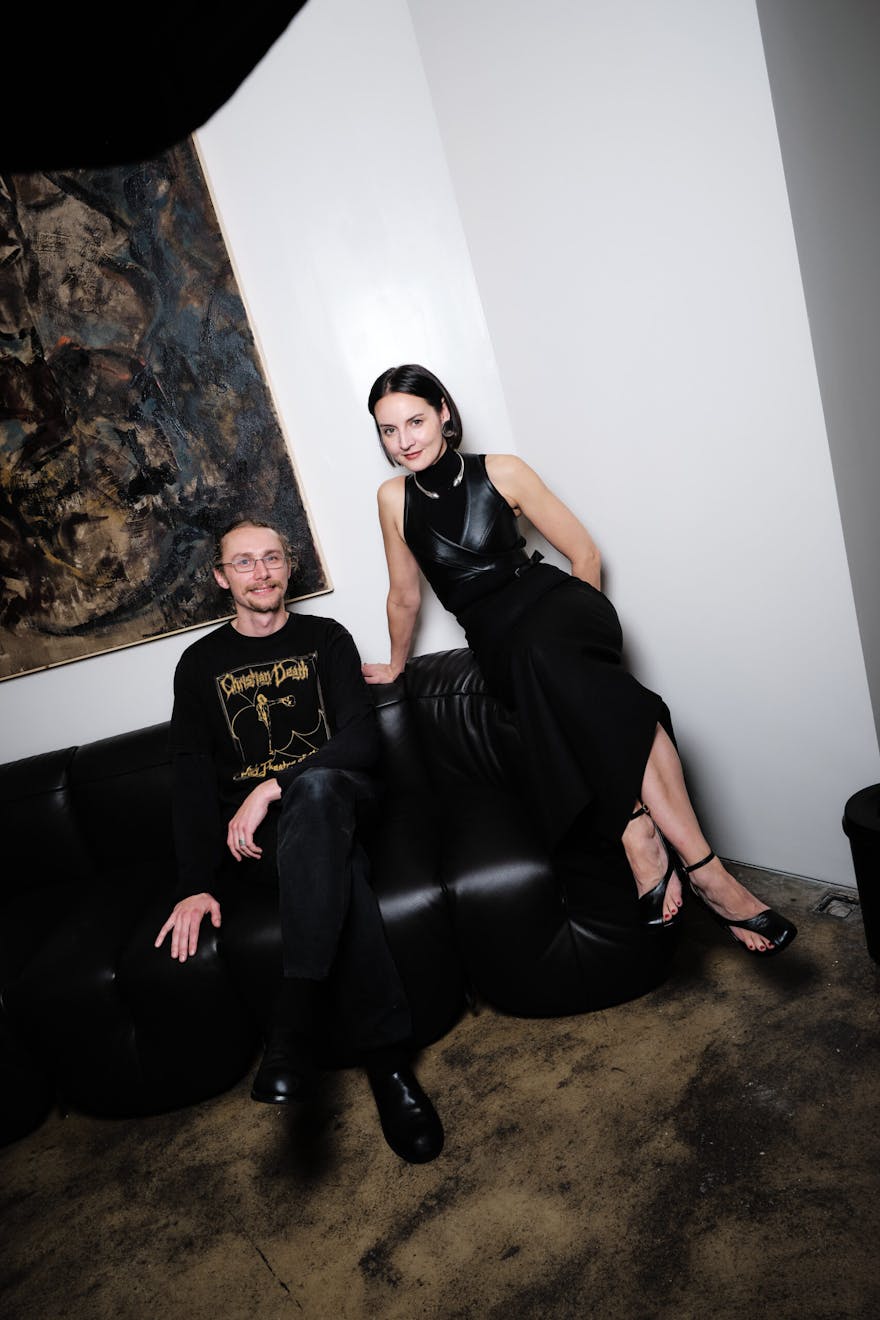
Thank you to Karen and Max for taking the time to show us around. Discover more about them below.