London Brut: Pricegore’s Sunken Paradise
Words by Hannah Nixon
“It’s about trying to develop a language that has integrity and rigour,” says Dingle Price of Pricegore when asked about how the practice approached London Brut, the RIBA London Award-winning 2025 retrofit of a 1960s Chelsea house. Founded with Alex Gore, Pricegore’s ethos is rooted in uncovering the latent context and character within the buildings they transform.
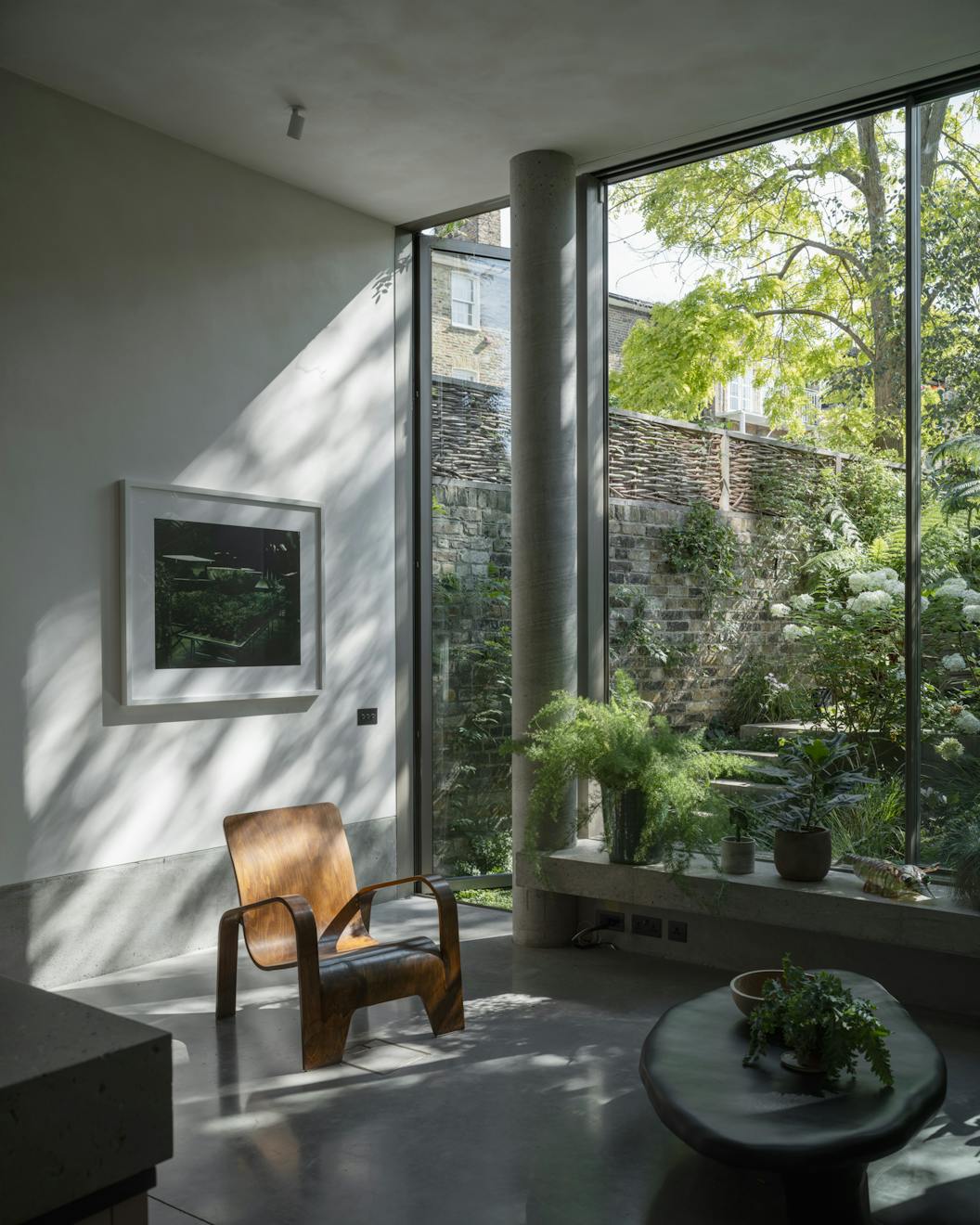
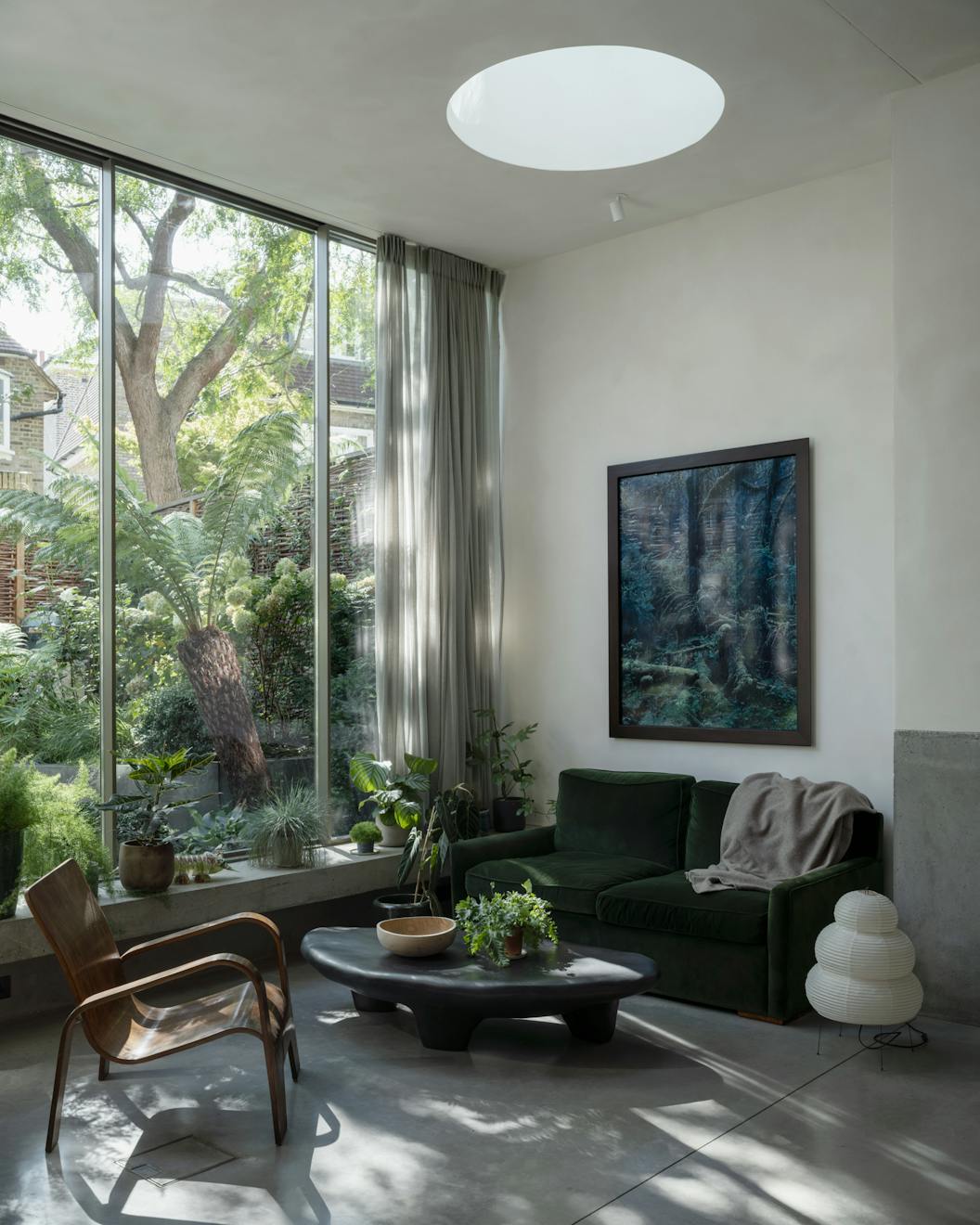
In London Brut, the practice revealed foundations substantial enough to support soaring three-metre-high glazed windows, which now shape the voluminous and dramatic living space. Pre-existing concrete structures were carefully exposed and celebrated, with béton brut, the French term for raw concrete, nodding to the project’s Brutalist heritage.
We sat down with Dingle to discuss the sensuality of staircases, the importance of not relying on a house style and Pricegore’s archaeological approach to building.
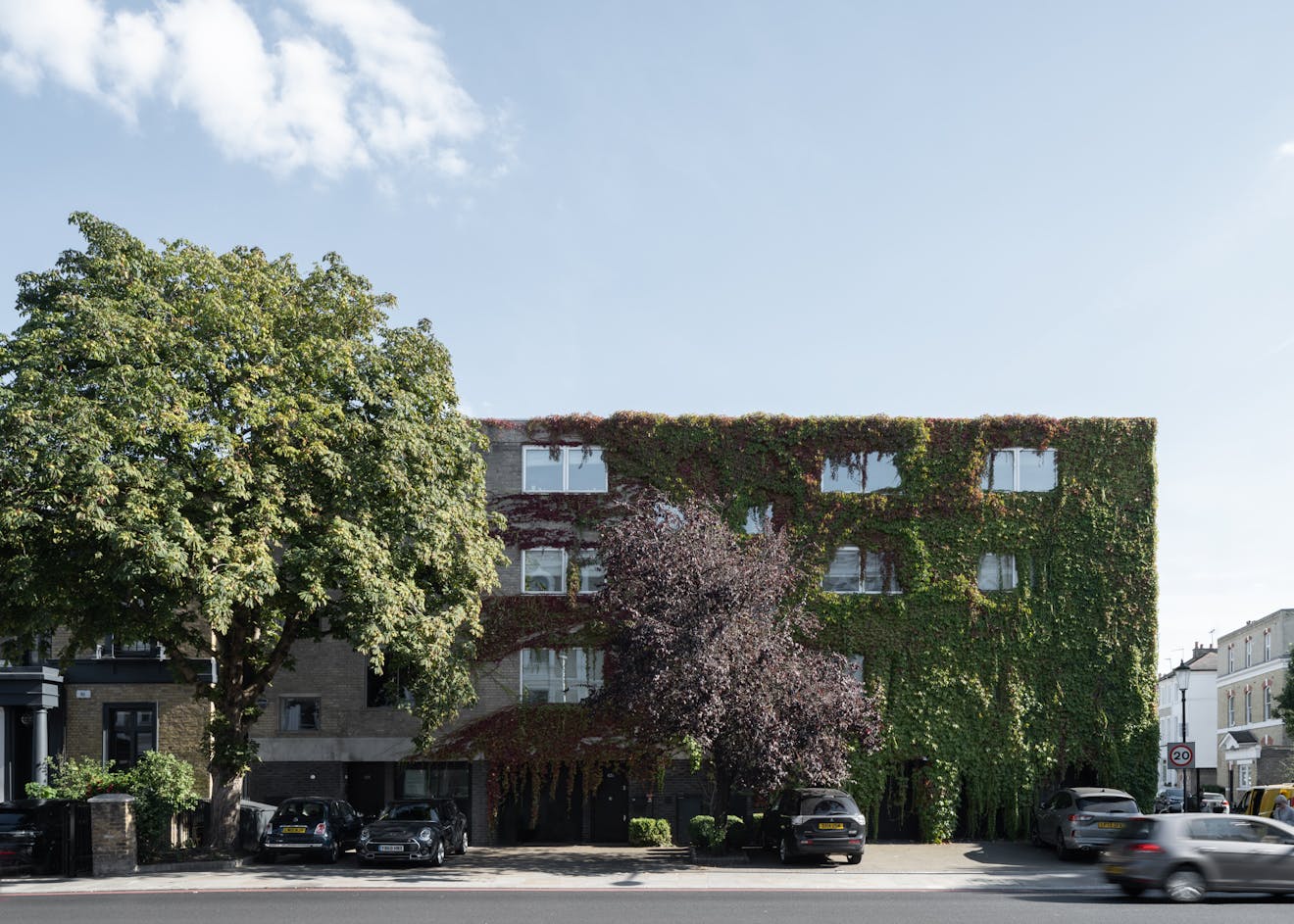
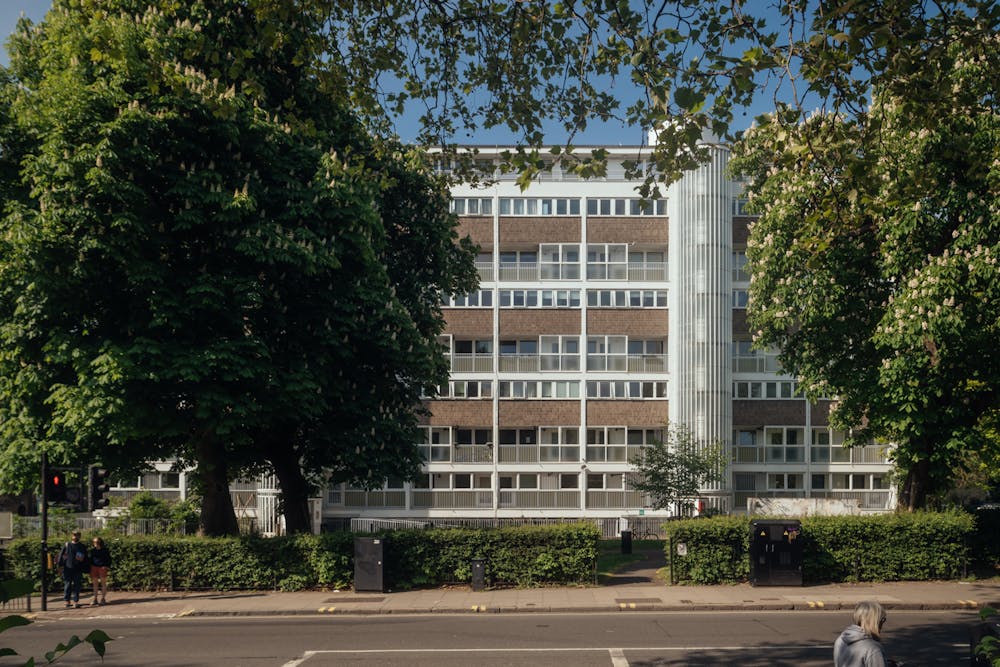
I went to see the house with the client, before they bought it. It was interesting in that it had been lived in by one family since the time it was built and no work had been done to it. So it lasted 60 years, and although it was a bit shabby in parts and some of the windows were in danger of falling out, it had lasted a long time. It was full of the owners’ possessions that had built up over a lifetime. It had a big library and lots of artwork on the wall and it just felt like it had been a really successful vessel for a rich, cultural, maybe academic life.
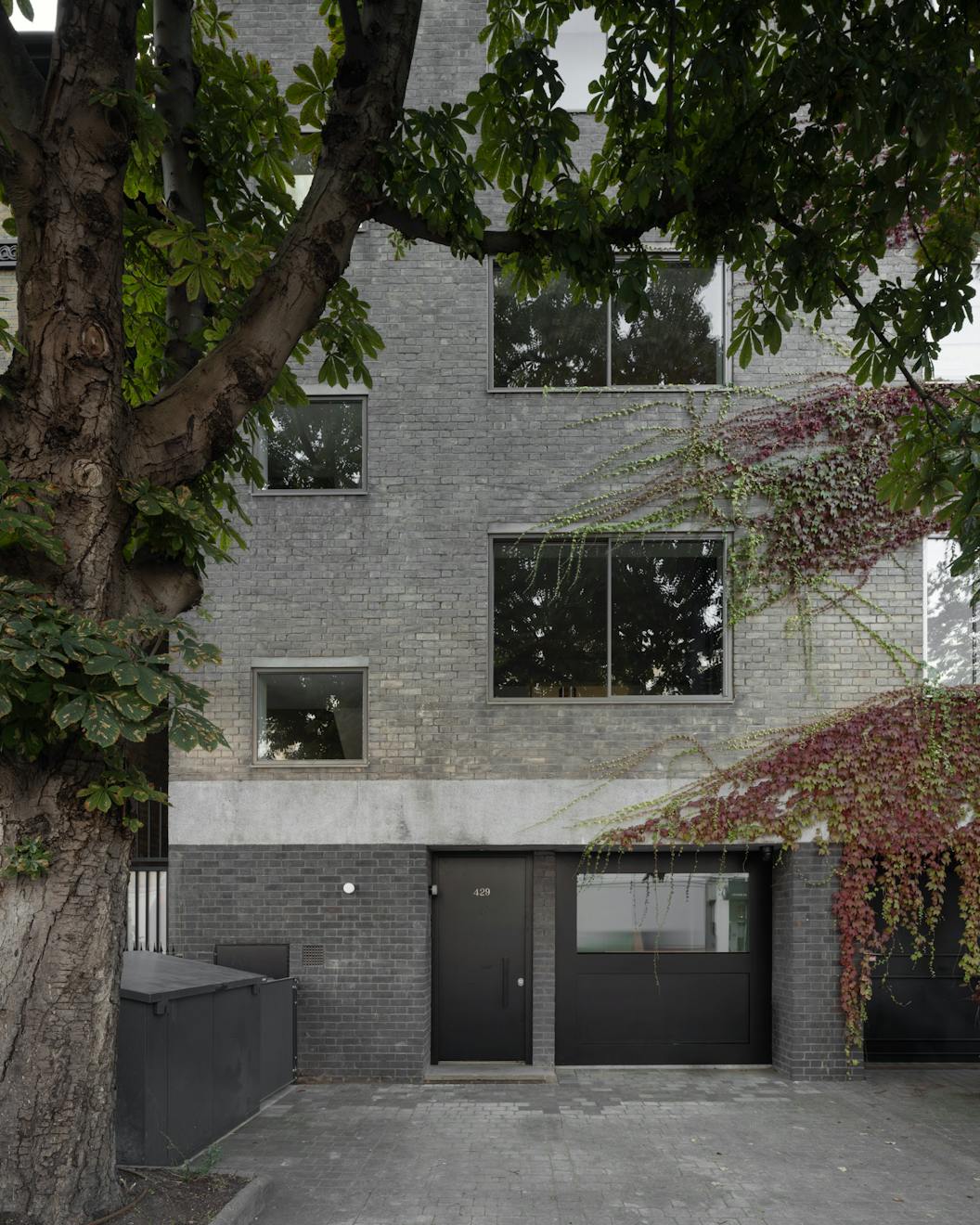
The garden was well tended and the architecture felt like all the fundamentals were good. The rooms, apart from the ground floor, were quite generously proportioned, the windows were big and elegant and it just felt robust, what you expect in some ways from a British house of the time.
The original architects were called Morgan and Branch. They actually had done a really good job of setting out the building on the site and laying out the rooms. But I think, as it was a commercial speculative development, they just did very standard internal finishes. So, it was really quite nice actually, seeing this depth of life in the building and just feeling that it was fundamentally good, but also obviously that it now needed a lot of work.
I would say that was quite unique. Very often we’re working on Victorian and Georgian buildings that have already been messed around a bit; adjusting or replacing old extensions, undoing bits of reconfiguration and those sorts of things. So, it felt quite different in that regard.
It did feel like we were taking over from the original architects. They made these four houses and ours was the last in the terrace of four to be redone, and the only one really to be done with any architectural sensitivity to the original. It felt like we were working with them, trying to make the best out of the design decisions they’d made.
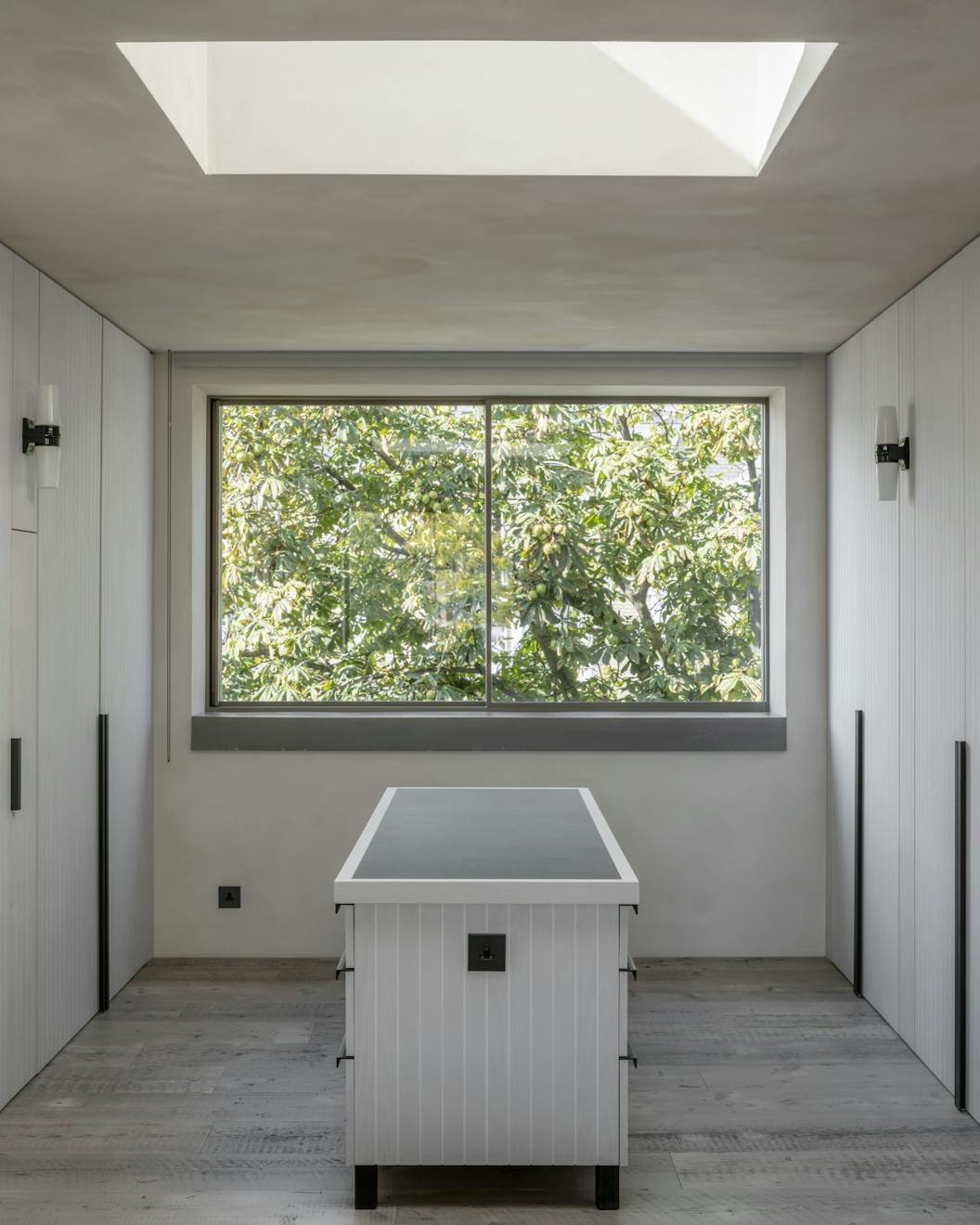
I guess it varies client to client. You know, sometimes clients give us mood boards. Or things, and we carefully work out the bits that we think have relevance to the project. We develop a language from that. The type of architects we are, we don’t really have any house style. We try to respond to the particularities of the site and the brief and then develop a language that is, I wouldn’t say it’s as simple as trying to give the client what they want, although of course you do have to do that. But it’s about trying to develop a language that has integrity and rigour. You develop a narrative, even though it’s not necessarily a narrative that finds its way into words, and just keep working as rigorously as you can to bring this thing slowly to life.
Its character comes really from listening to what was there and trying to help the house be the best version of itself. I guess what we do in all projects is look for latent potentials that the building has. For example, we discovered that there was a previous house that sat on the site, a split level Victorian house that had a lower ground floor a metre and a half below street level. That meant, for structural reasons, the new house, even though the ground floor was completely level with the pavement, had to have very deep foundations to match the level of the Victorian house that was there before.
Once we discovered that, the idea of excavating presented itself. Without those deep foundations, excavating would probably never have been an option because it would have been really expensive, so we would probably never have proposed it. It’s about finding things that are already there.
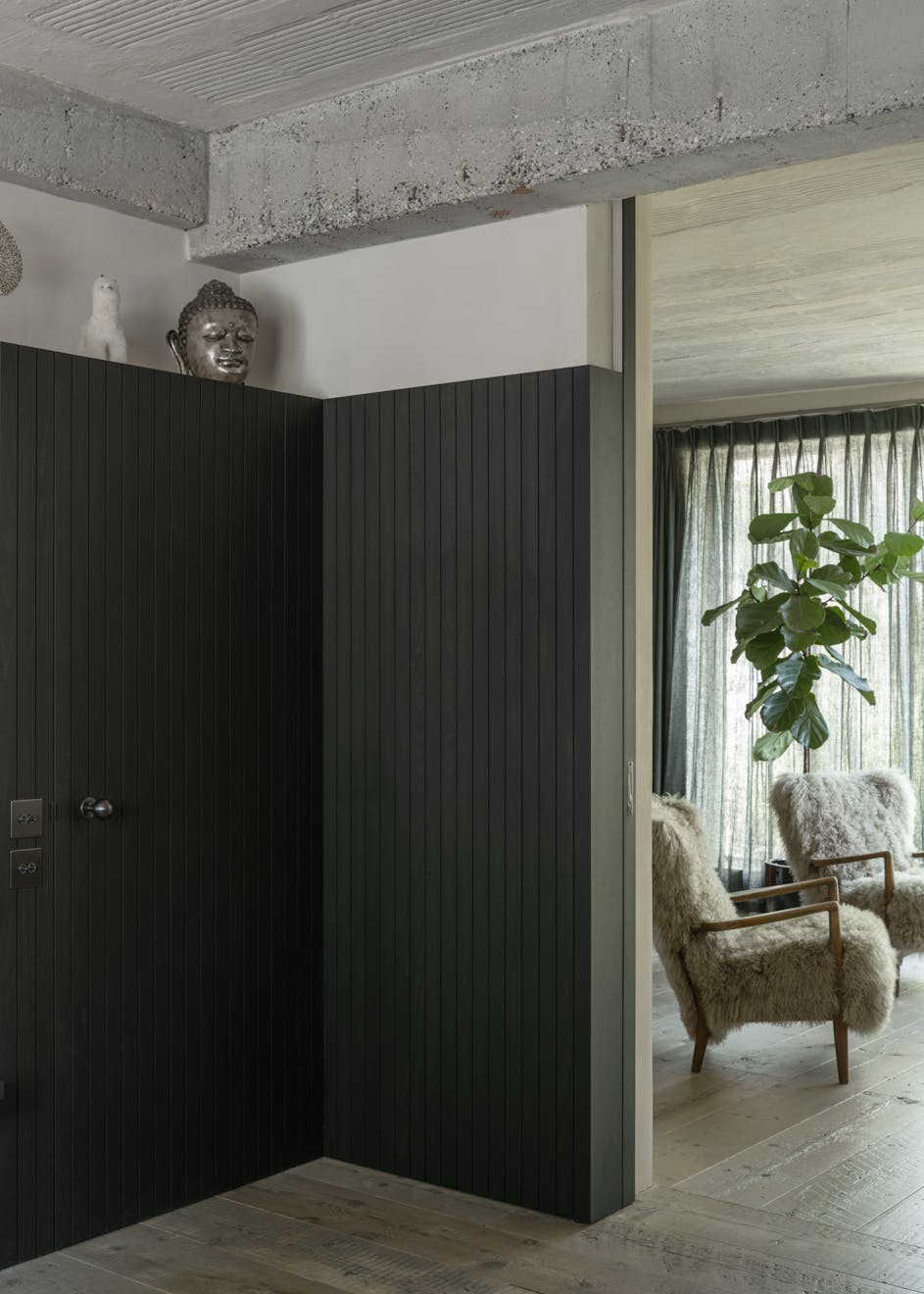
Another example might be the ceilings. They came from trying to understand how the floors were made and therefore peeling plaster off the ceilings. We discovered that it was what you call a ‘clay pot formed concrete slab’, which meant it had this quite interesting ribbed texture. So rather than applying something to create character, we pulled all of the plaster off and at the same time went a bit further and pulled all the plaster off the concrete beams from the slabs. Suddenly it started to feel like a concrete building.
That then led on to the new parts of the project adopting that language. The fact that a lot of that new ground floor space is concrete isn’t because we necessarily love concrete or anything like that, it’s because we found this thing in the house. It’s a sort of archaeological approach.
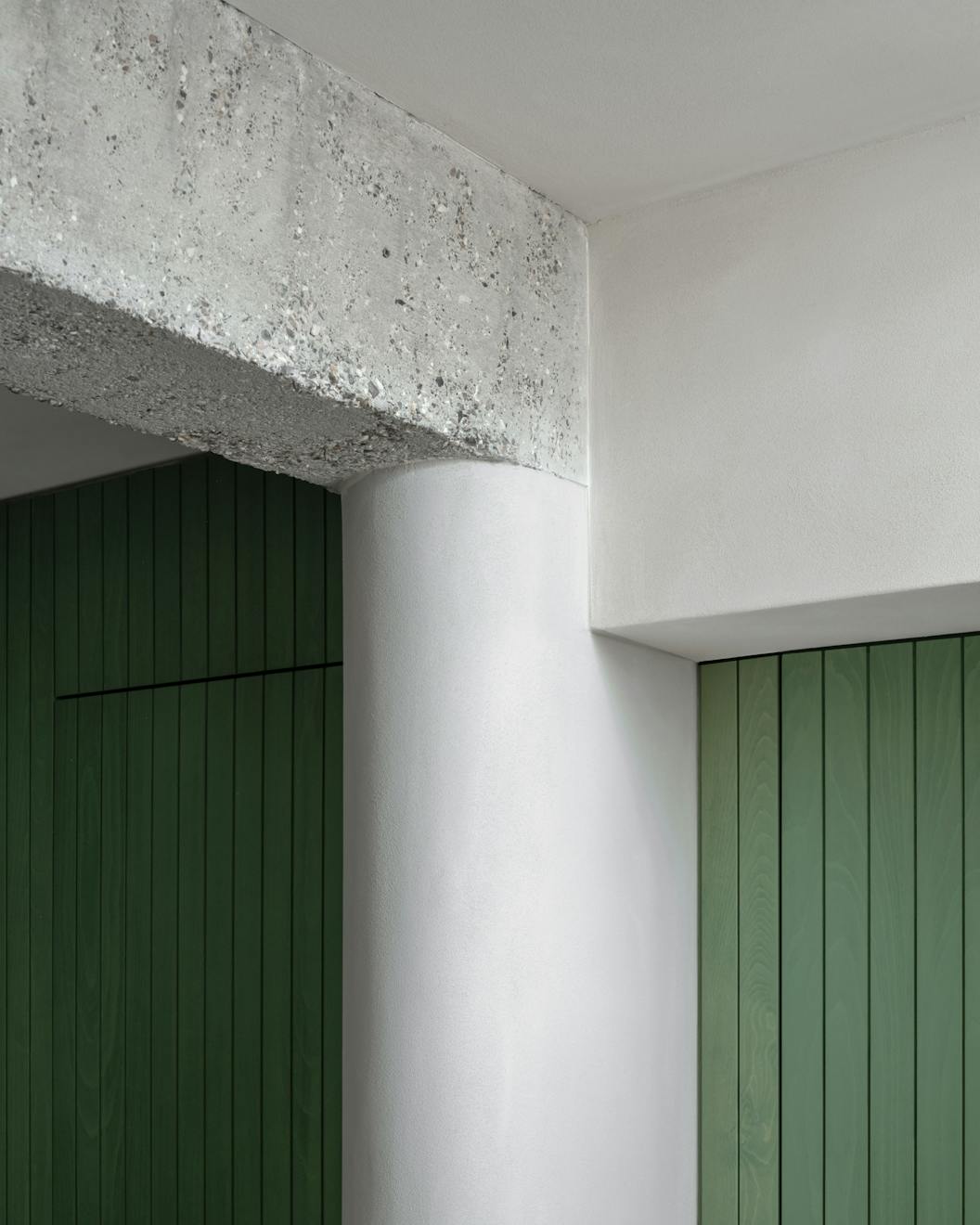
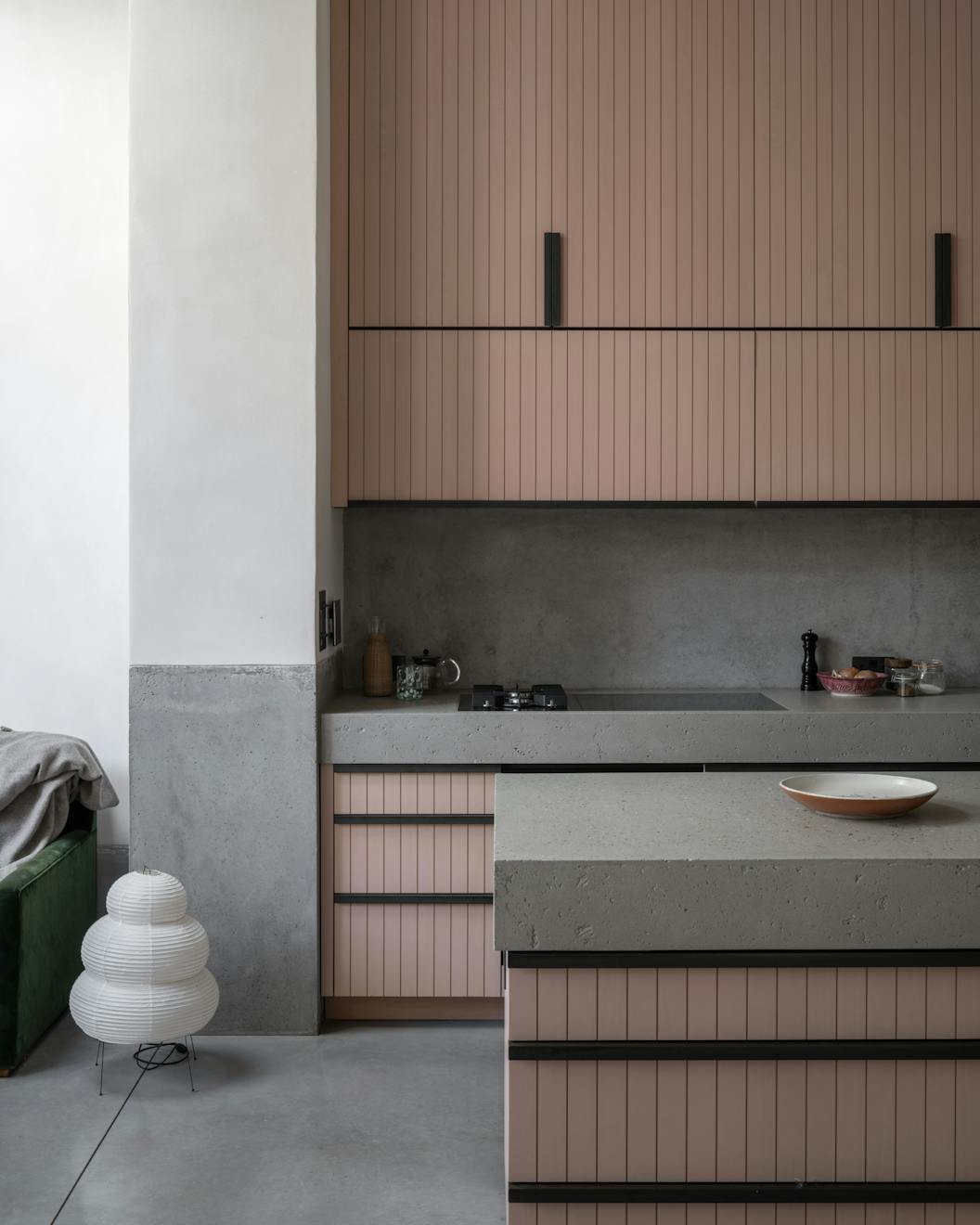
There is no paint in the project, and that wasn’t something we initially set out to do, but I think we realised in the early days of it being on site, we’d designed something with no paint. The client was interested in colour, so the joinery is dyed beech, and the dyes are bespoke colours that we mixed ourselves. We spent ages with a syringe mixing all these colours and making samples.
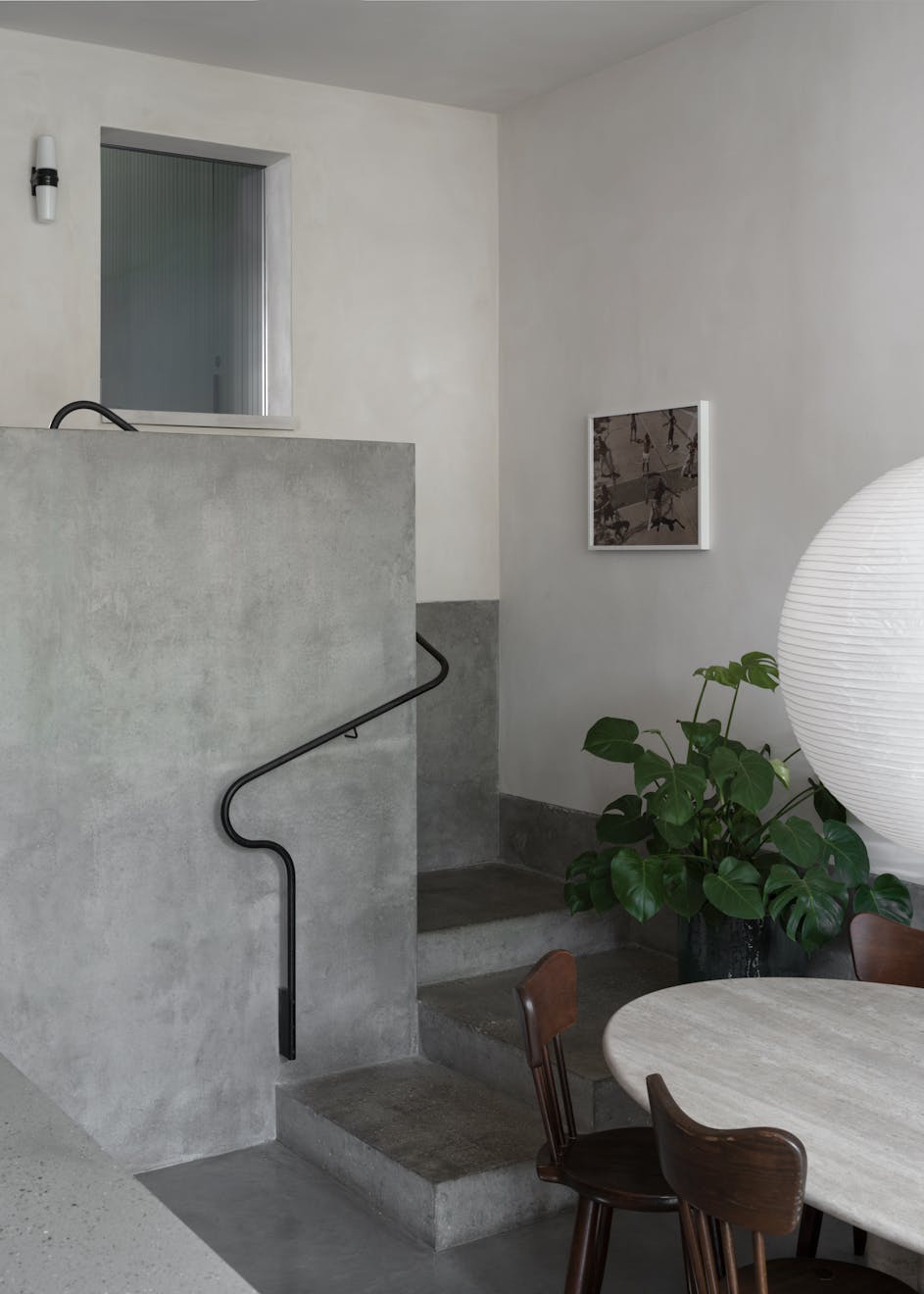
When you have a four storey townhouse, the stairs are important. Because we excavated, there is one completely new stair and the rest of the stairs are existing but redressed. Whereas it did have a spindle balustrade, we turned it into a solid timber balustrade. The main thing was that the handrails would have quite a sensual character. As well as being nice to look at, they would be nice to touch.
The stair down to the new lower ground floor and the first flight of the old stair up to the first floor have steel handrails, very narrow blackened steel handrails that when you touch them are quite cold and you are aware of the narrowness of the cross section. Then that changes as you get to the first floor. The floors change from concrete to timber and the handrail changes to this overscaled, solid ash. You are very conscious of that transition from something hard and cool to something warmer and softer.
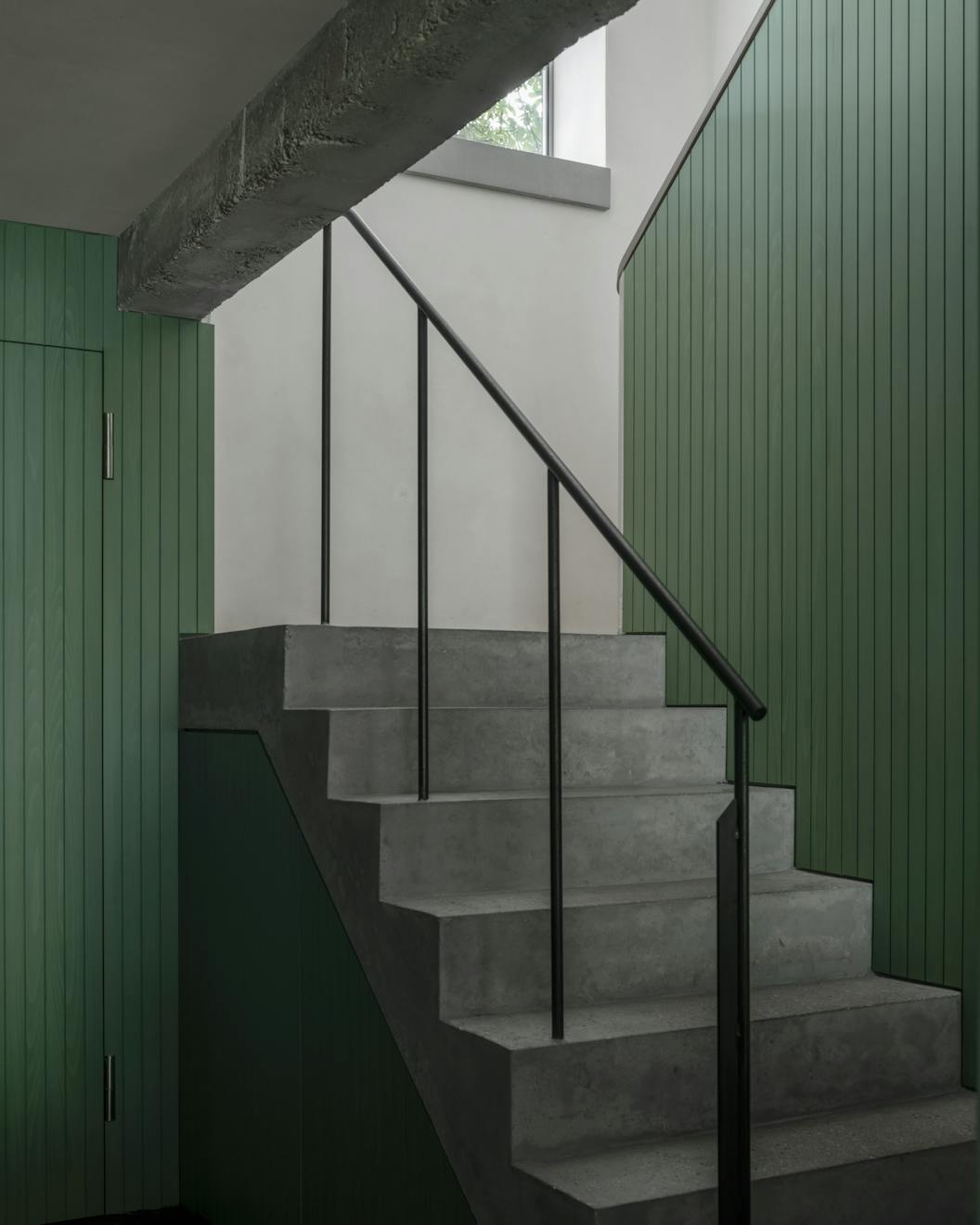
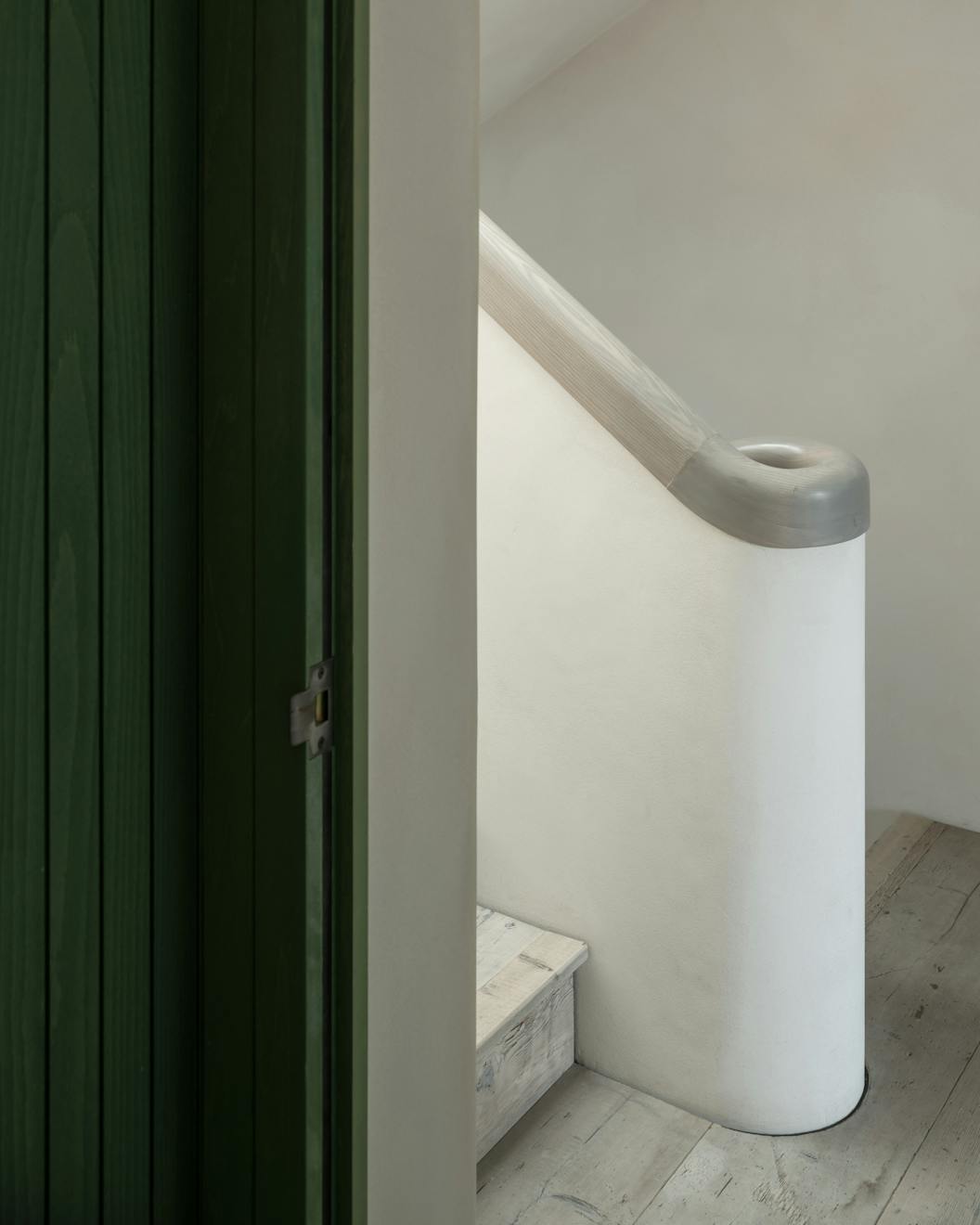
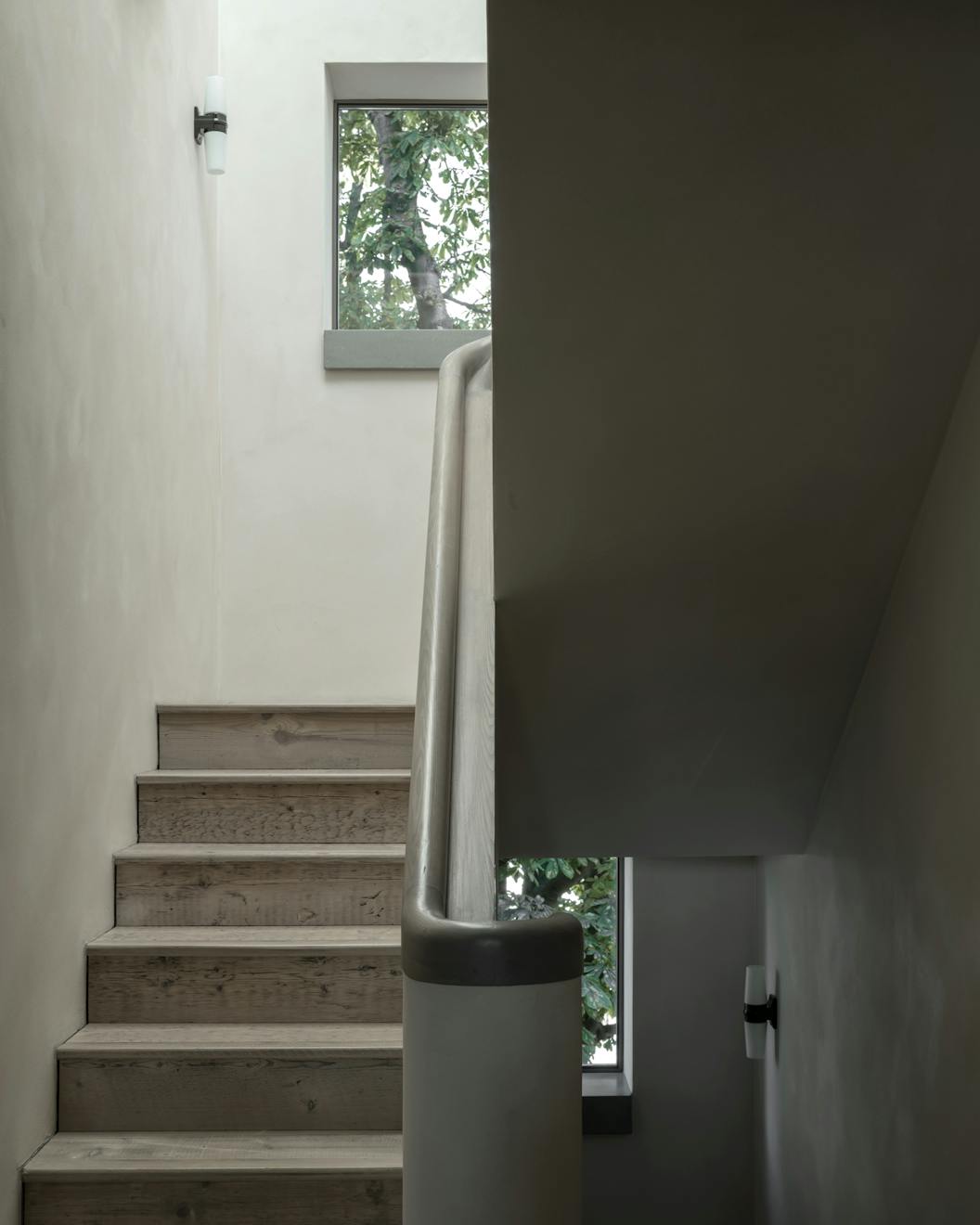
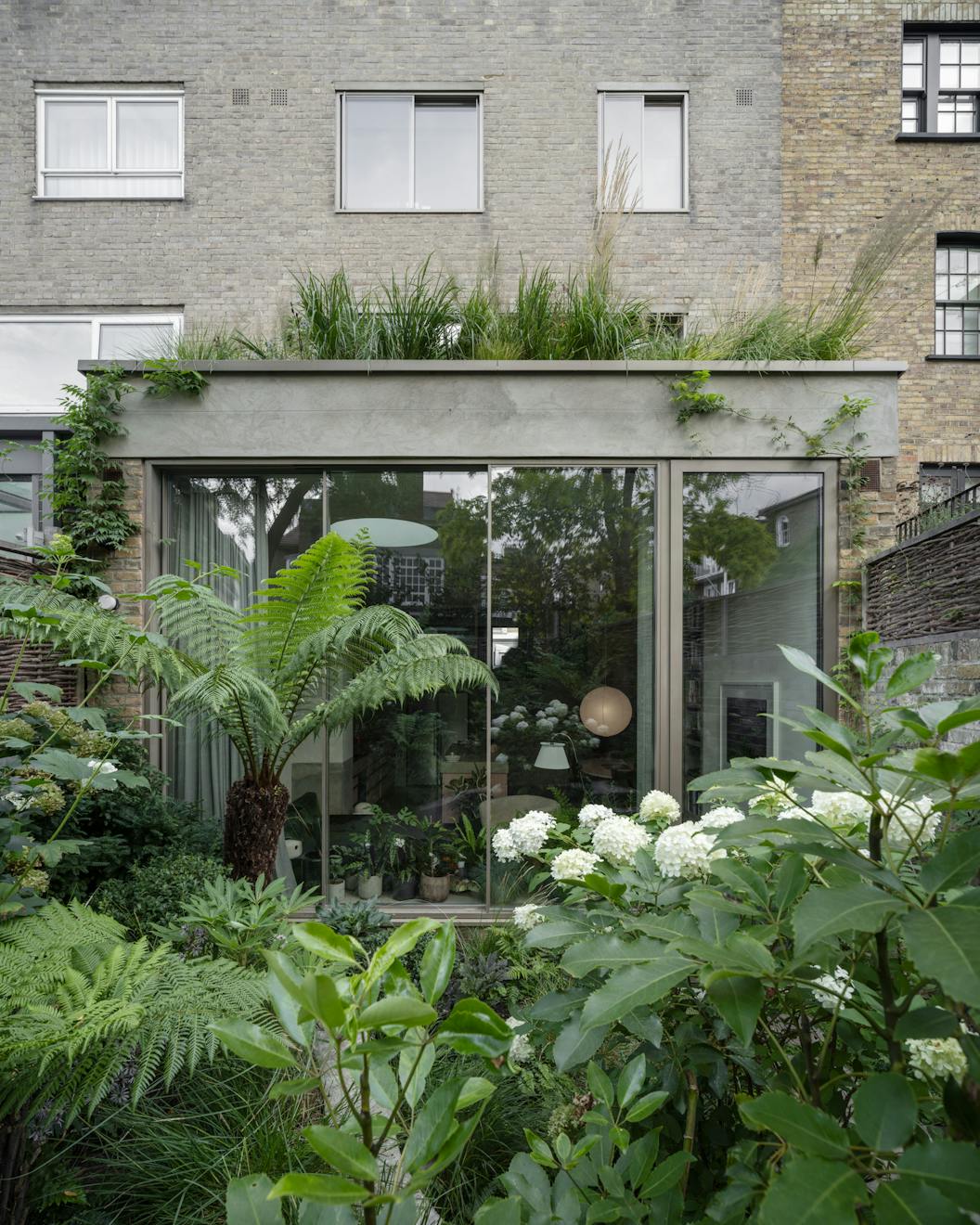
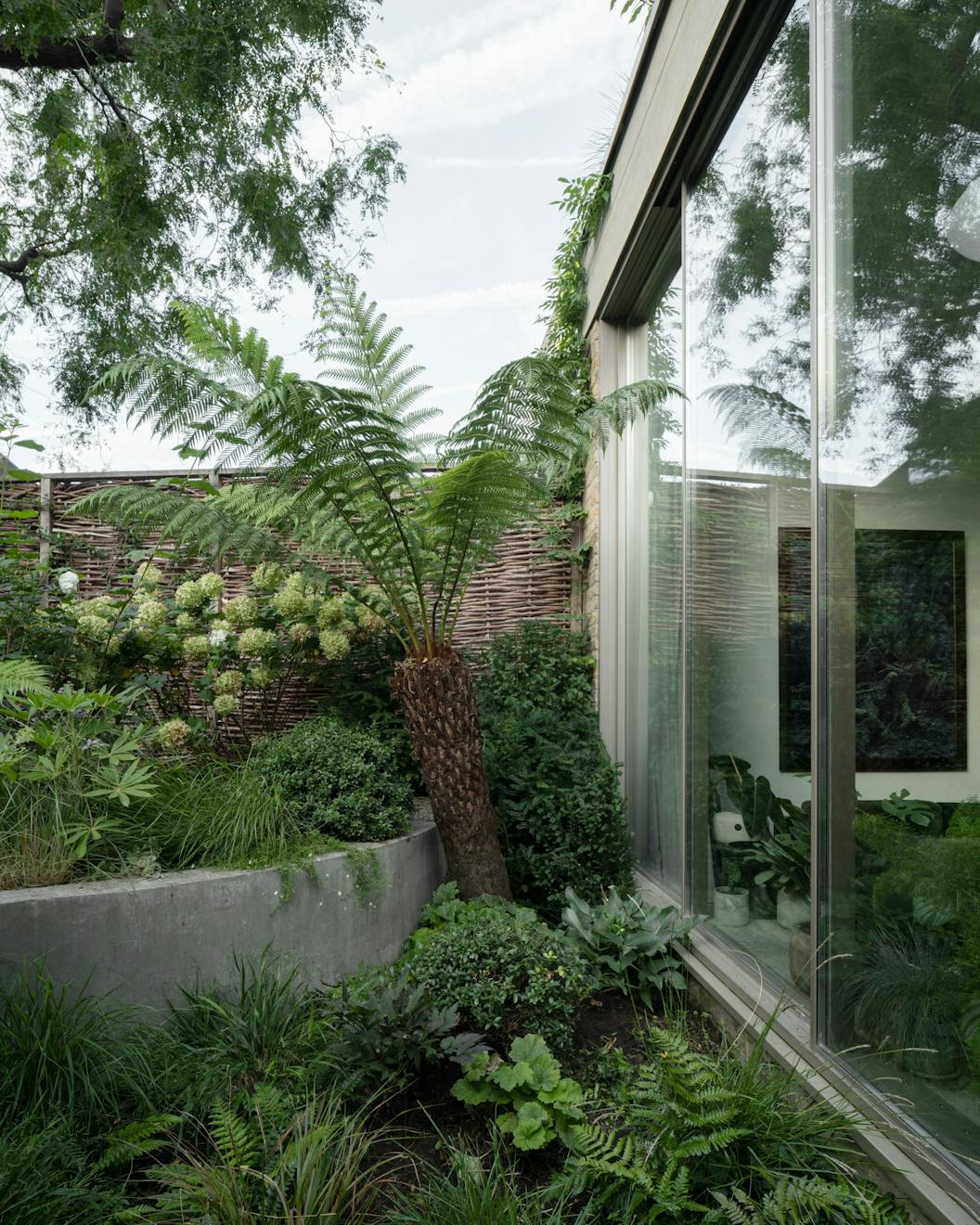
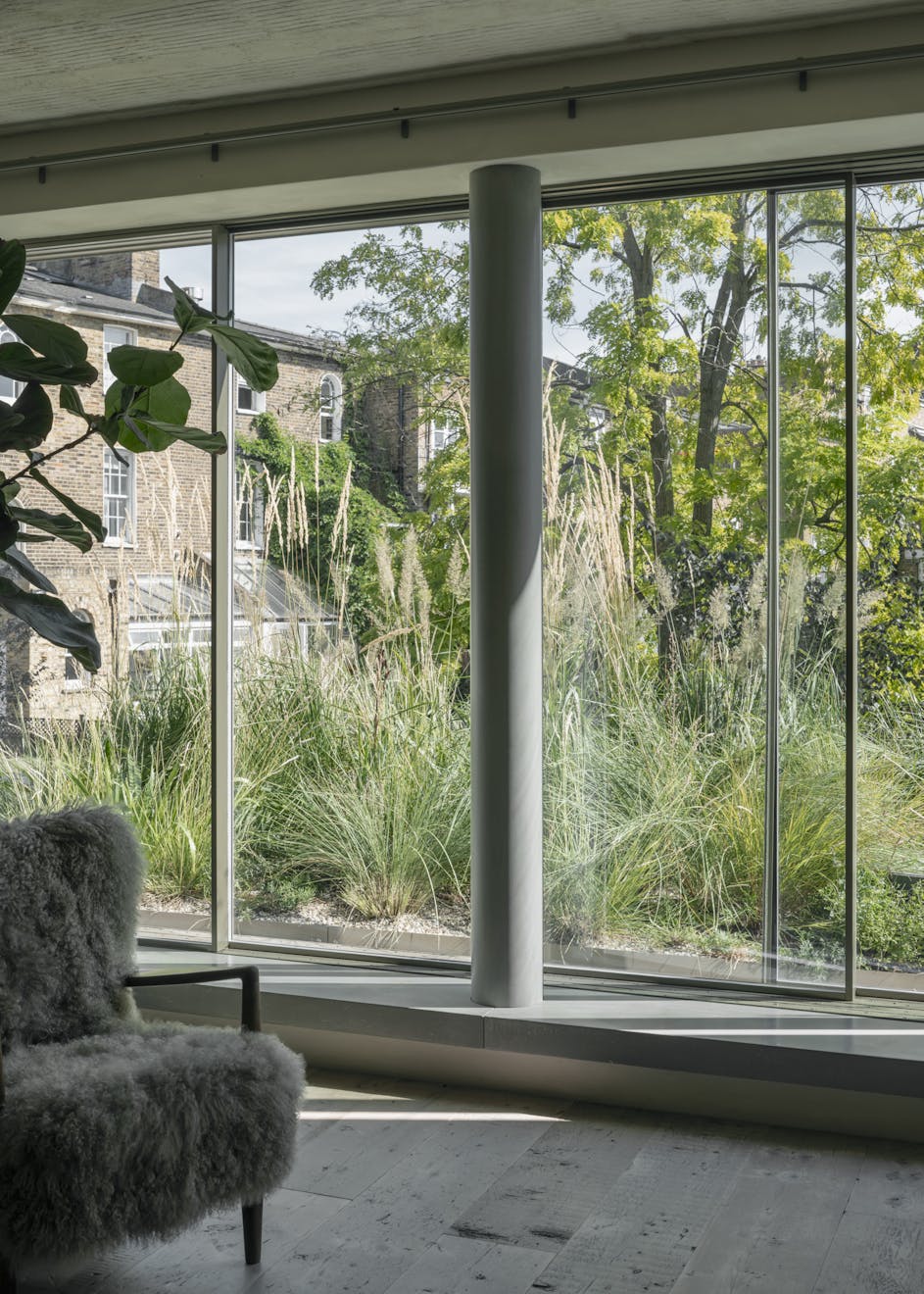
The extension is three metres deep and then we left most of the garden at the pre-existing level, which means that from that new living space you are sitting about a metre lower than the garden. There was this idea that the garden was really more to be looked at than to inhabit. The client wanted an escapist garden or a fantasy garden. Something that would look good all year round and something that did not necessarily talk of London but of somewhere other.
Thank you to Dingle.
Learn more about Pricegore here.