Stone and Steel: Going Back to Basics with DGN Studio
Words by Hannah Nixon
“We often work with common materials, but the key is how you play with them to create subtle details”, says Geraldine Ng, who co-founded Hackney-based DGN Studios with her partner in life and work Daniel Goodacre. The duo are naturally in sync, finishing each other’s thoughts and frequently agreeing as they reflect on the spatial qualities and material language they’ve developed.
The result of this latest collaboration is Stone and Steel House, which exudes a sense of harmony, made all the more remarkable by the addition of Creative Director Sarah Izod, who contributed significantly to the project’s aesthetic decisions on behalf of the client.
We sat down with them to discuss how they looked to the sky to transform the North London townhouse of a fashion designer and research fellow into a light-filled, contemporary home.
Geri: When they came to us for the refurbishment, there was already a small extension, about five square meters, for the kitchen. They didn’t actually need any more space because it’s quite a big house. At that point, it was just the two of them, though they had been thinking about starting a family. So, the brief was initially for a refurbishment rather than an addition.
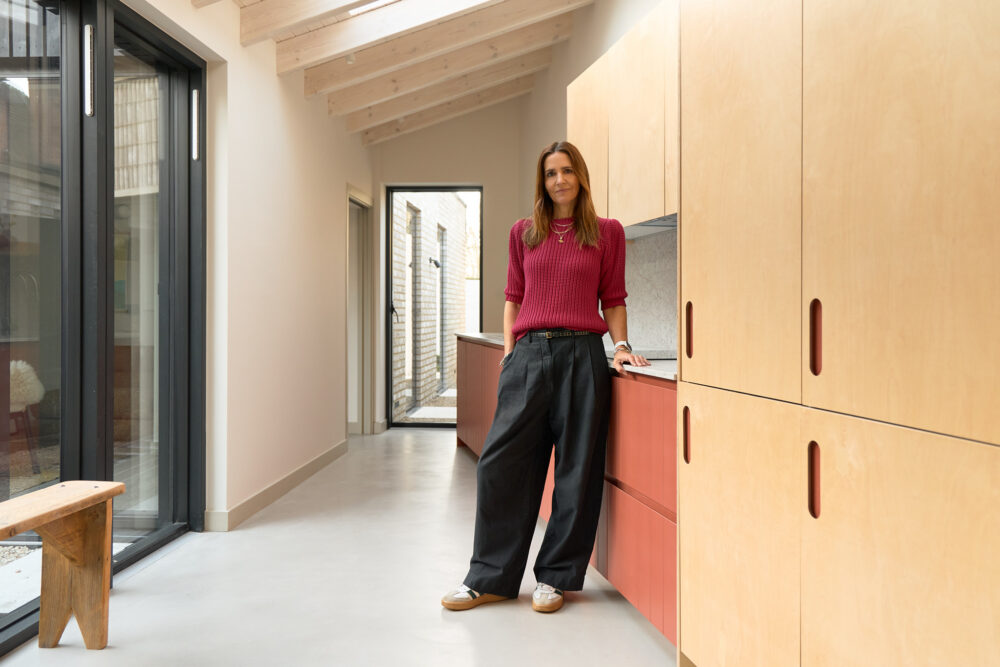
Daniel: Yeah, the stair was leaning and had some issues, but it wasn’t about adding more space. Initially, it was more about reorganizing. The existing rooms were generous, but the kitchen at the back was in a classic sort of closet-like space. It had a really low ceiling, felt cramped, and wasn’t connected to the rest of the house. Clearly, it didn’t work for their lifestyle.
Geri: And it wasn’t proportional to the size of the house.
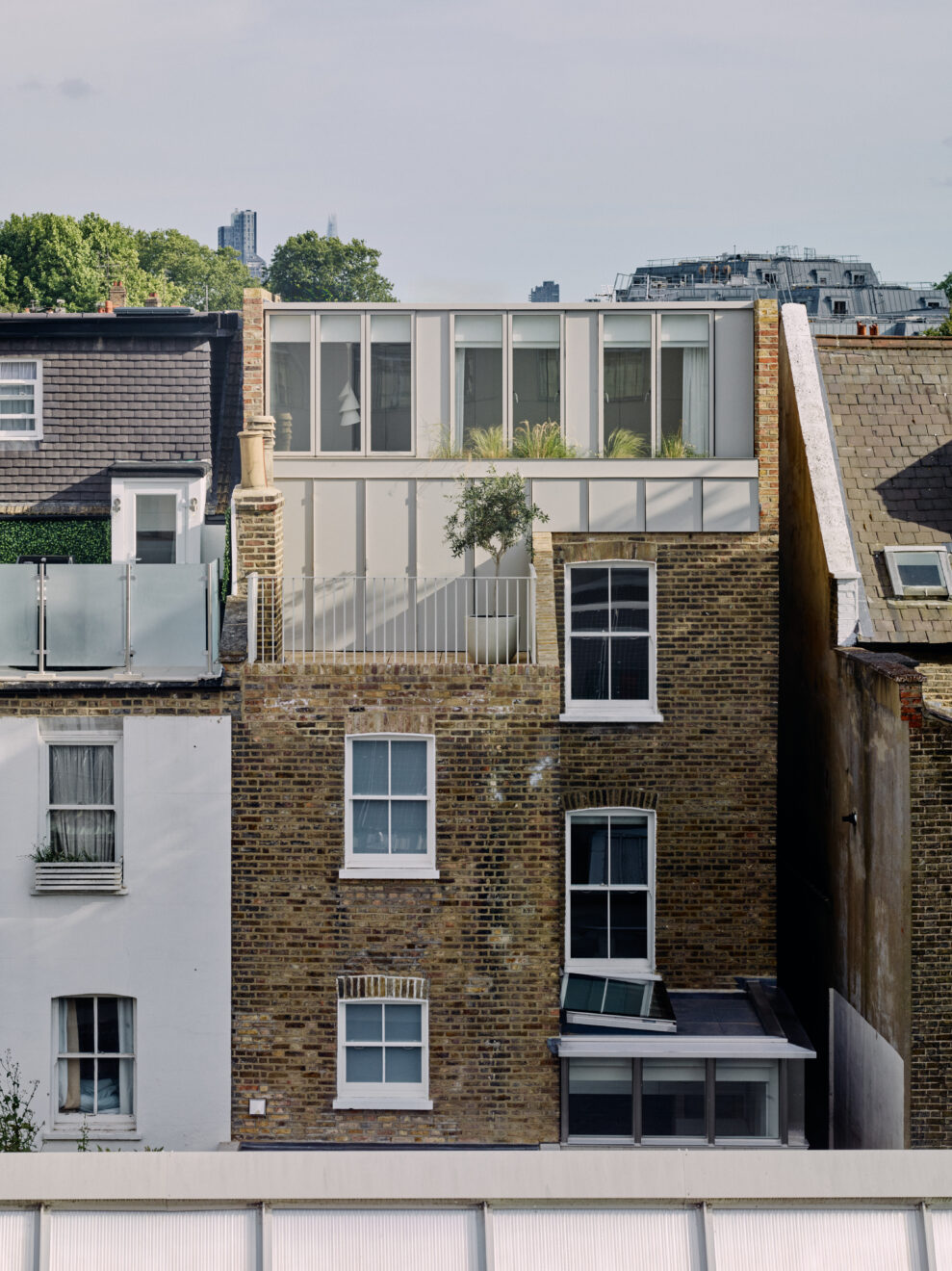
Daniel: And because we weren’t extending out, we thought it was nice to go upwards in the house. It was always going to be quite tall.
Geri: By adding the dormer and using the existing landing, we actually created an upper-level terrace, a sort of outdoor garden, which lifted everything up and felt much more private than the downstairs.
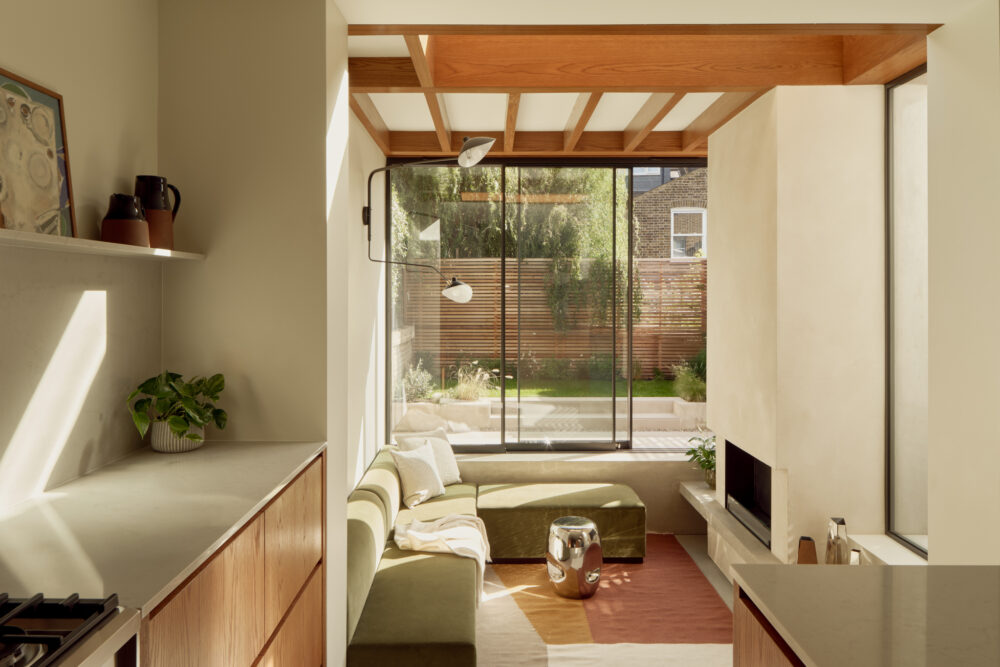
Daniel: Definitely. I’d say light is almost the primary material because, regardless of what you choose to build with, fundamentally, you’re always trying to get good lighting in the house. It’s not just about bursts of sunshine; it’s about how a particular space is lit. We were never going to get direct sunlight, but the windows create a really nice, ambient glow throughout the day in that space.
Geri: As well as the connection to the sky. That’s a key moment.
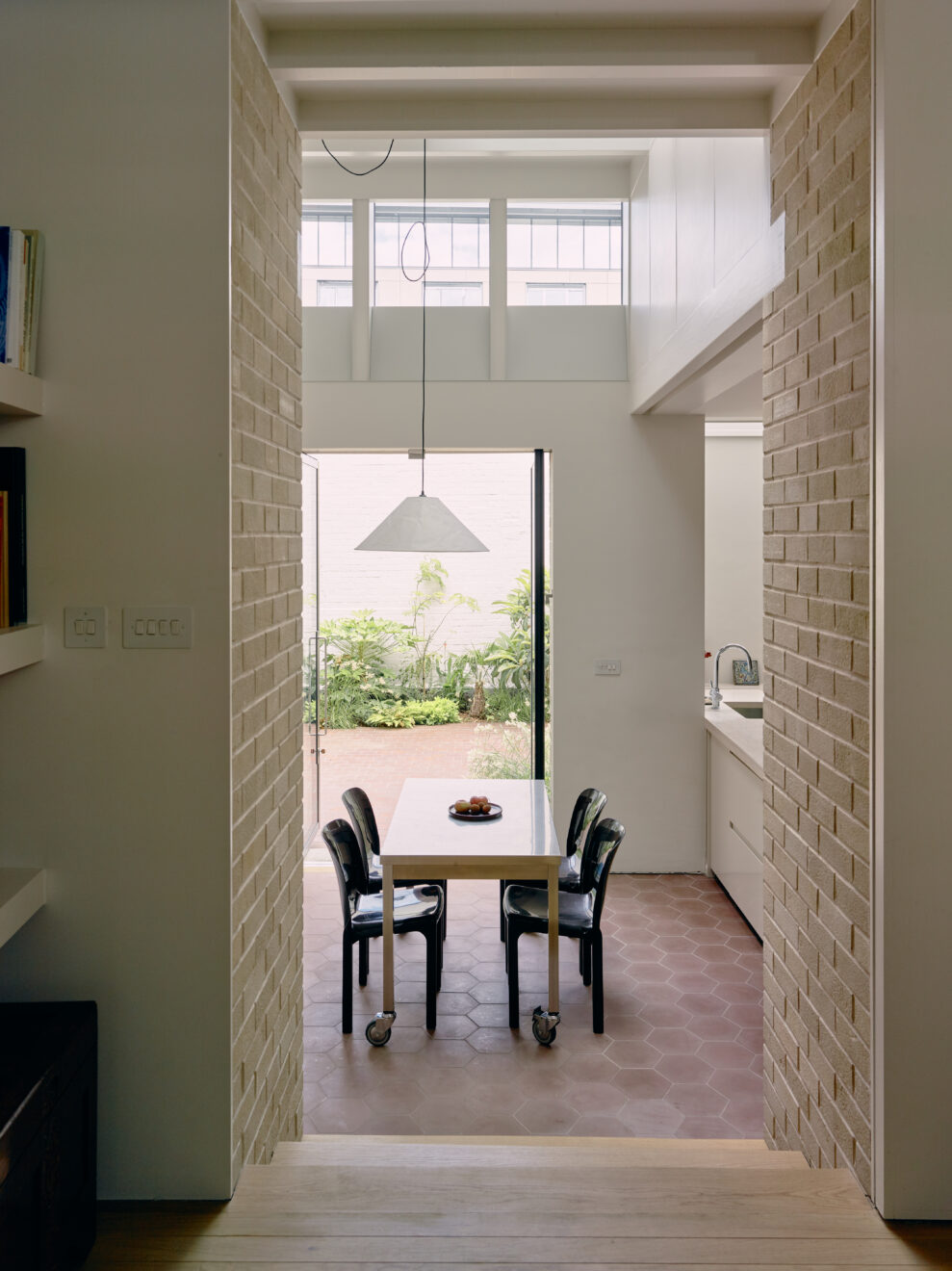
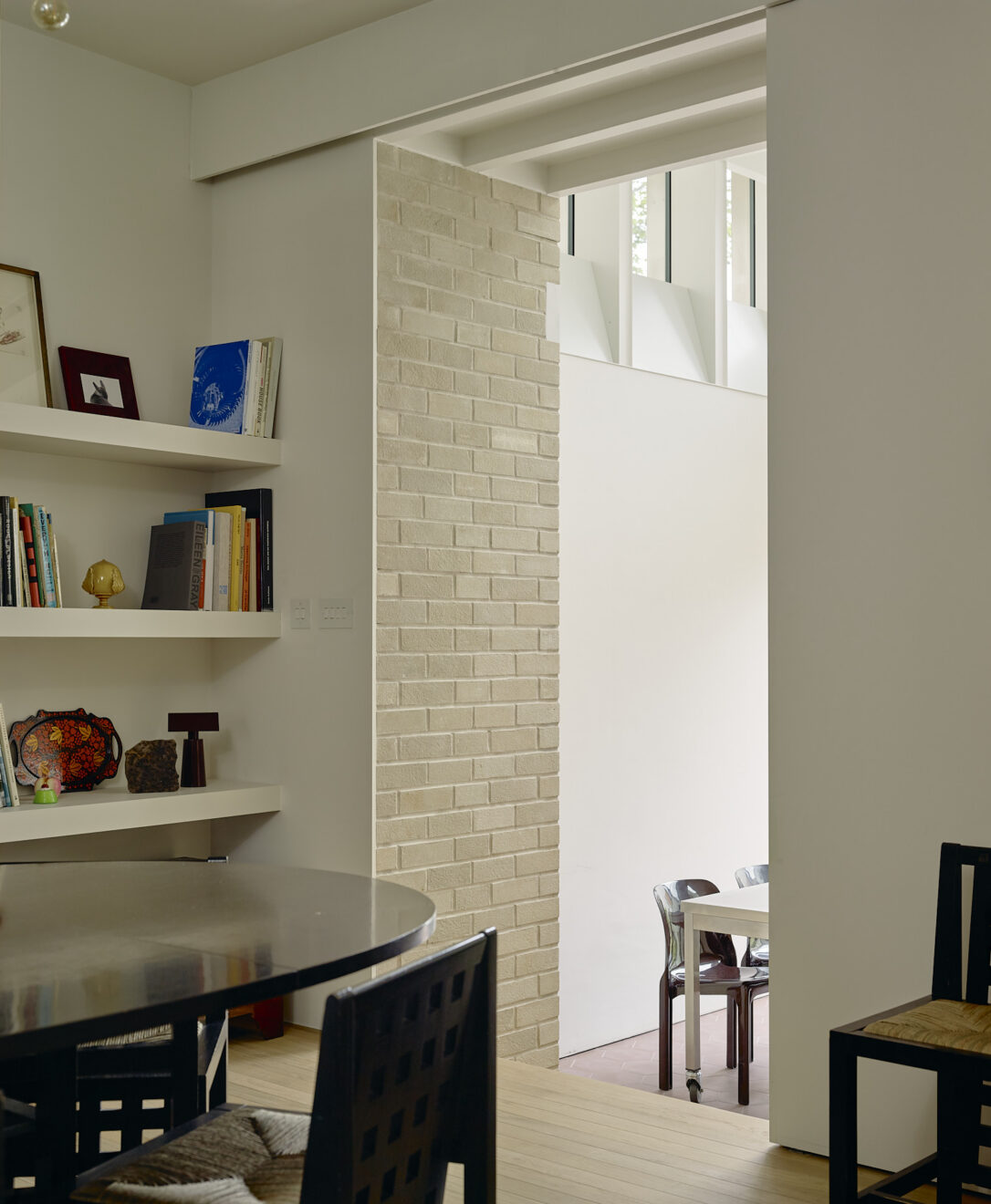
Daniel: Exactly. As you come into the house, with the big open connections between the hallway and the middle room, and then from the middle room into the extension, you get these nice diagonal views. Because it’s quite high, you can actually see all the way through from the hallway, through the trees and beyond. We were trying to create moments with longer views. It’s really about creating a certain atmosphere.
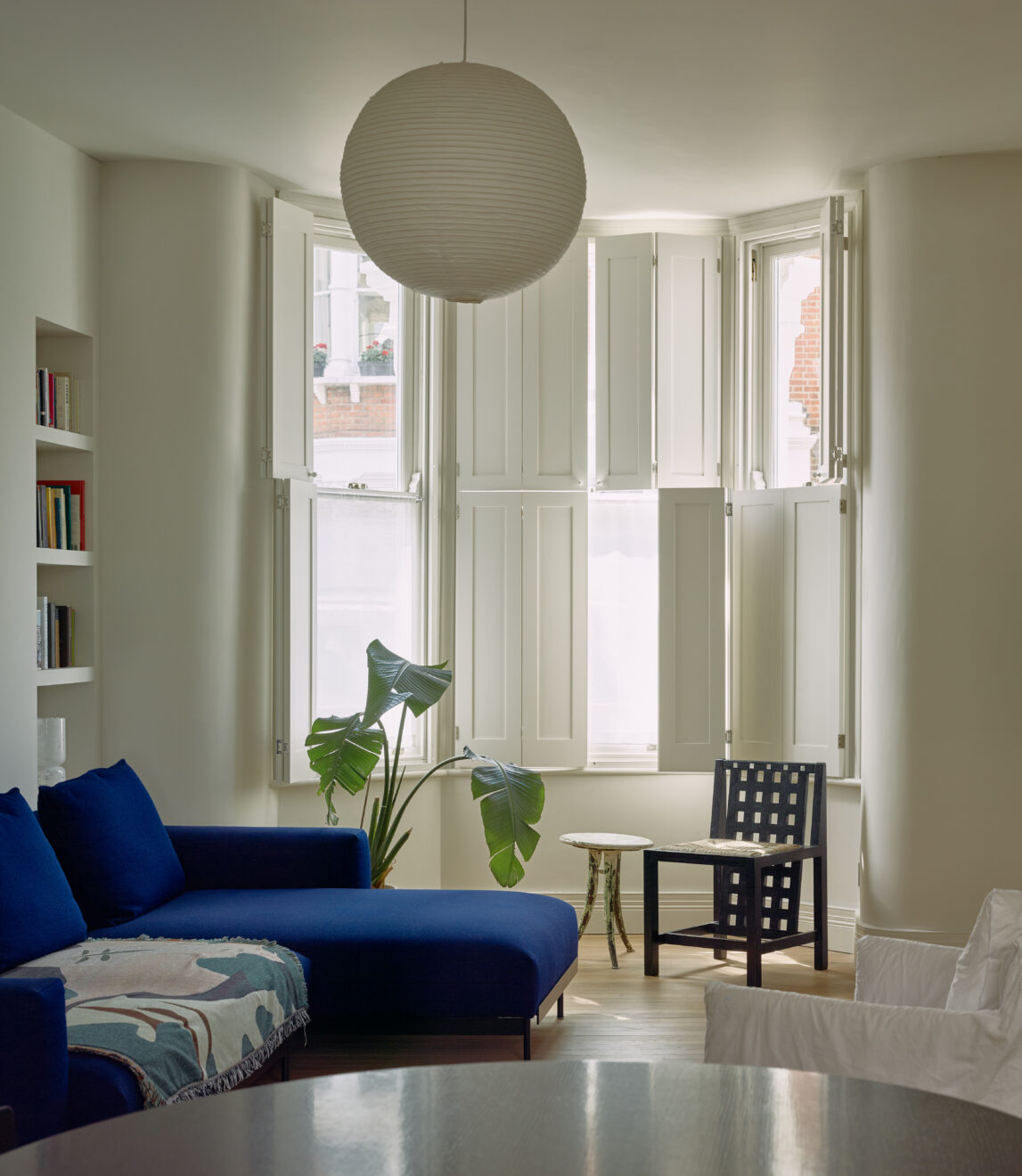
Daniel: I’d say both. One of the clients is a fashion designer, so she has a very strong aesthetic. We worked with a friend (Sarah Izod) on the interior materiality early on.
Geri: She actually introduced us to the client. Her background is in architecture, and she’s now a creative director. Normally, we’ve worked with others at later stages, but this was a full creative collaboration, and it was fantastic. Sarah and we have similar approaches, so the clients were very happy with the outcome.
When you asked whether the clients had a specific aesthetic, we tried to gently break that down. If someone comes in with a very rigid aesthetic, it can feel a little restrained. We work with clients to really hone in on what they love about an image or reference, whether it’s the natural materials, the light, or something else, and then pull that into the project.
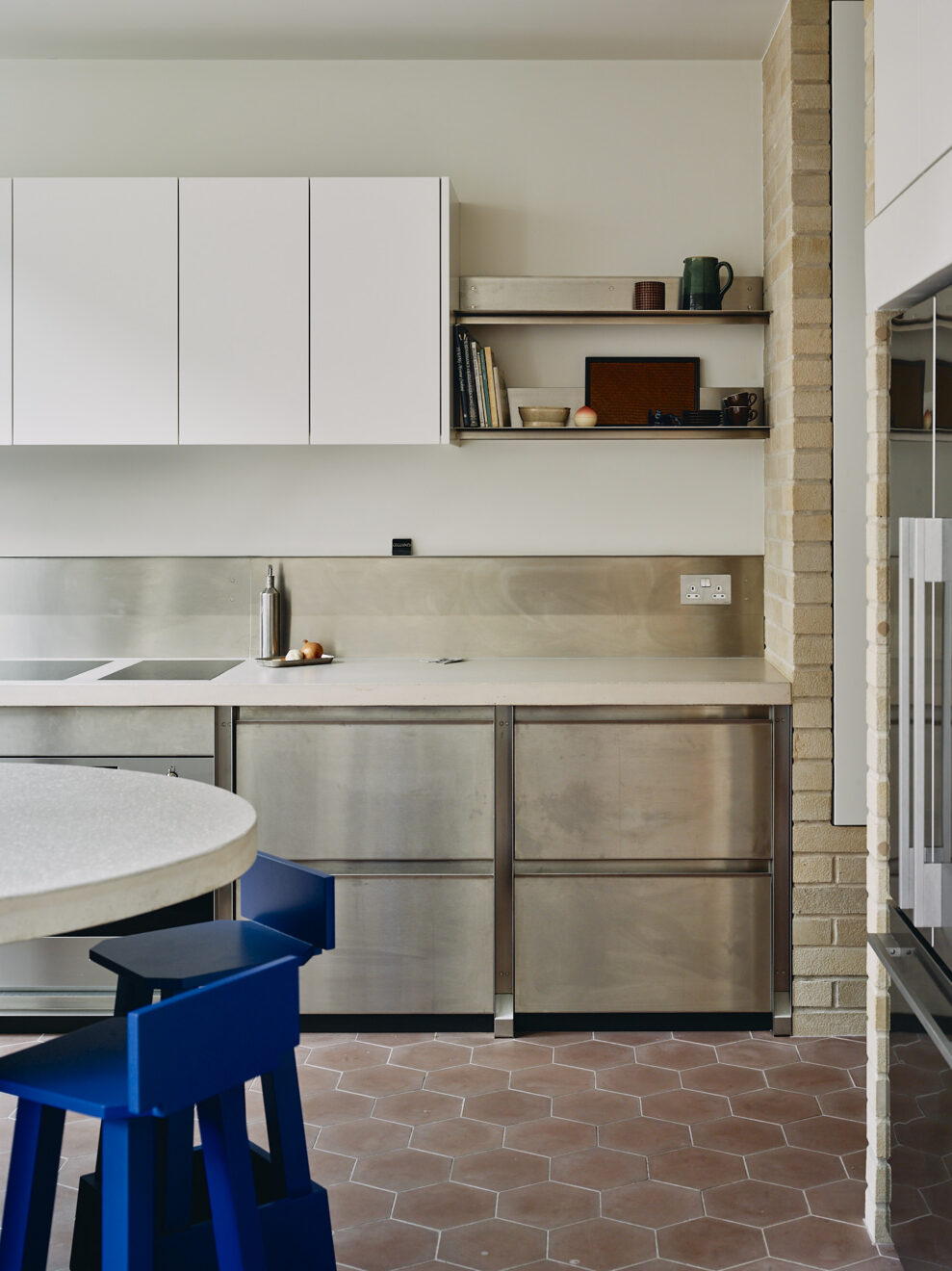
Geri: We’re quite rigorous with materials because we want it to be a really lovely space they can live in, not just a showpiece. People often have preconceptions about what they think they like, for example a concrete worktop and floor, but the reality is they might not handle the natural characteristics. Concrete, for example, stains and is porous. That can be wonderful for some people, but a challenge for others.
Daniel: And it might be completely inappropriate for that space. It’s not about denying their choices, but making sure they get what they want and what will truly work in the space and last.
Geri: Otherwise, you see examples where people have installed things, and the image in their head doesn’t translate to the space. Everything feels too tight, the materials don’t suit their lifestyle, and it just becomes a bit of a disaster. We aim to avoid those situations.
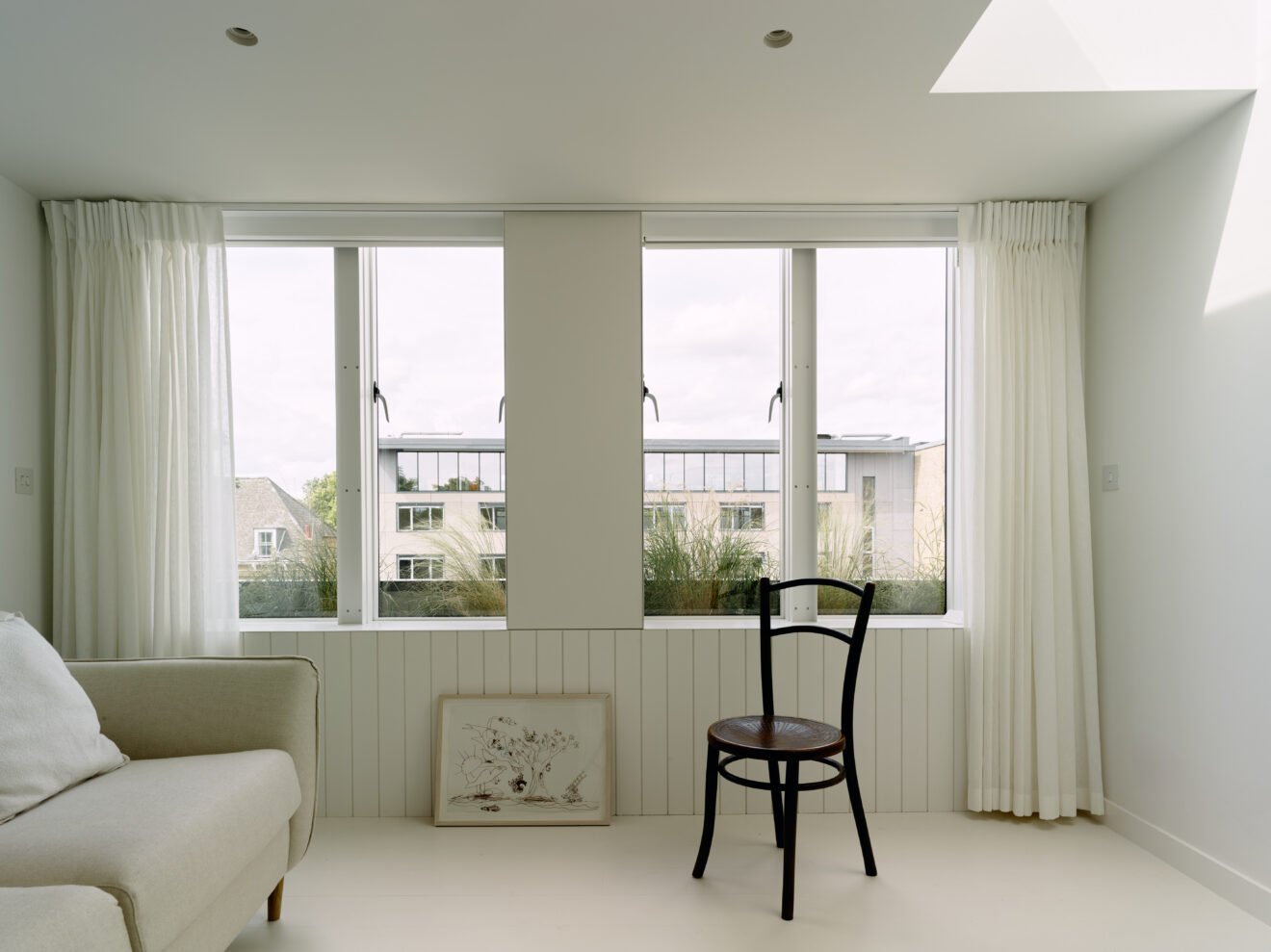
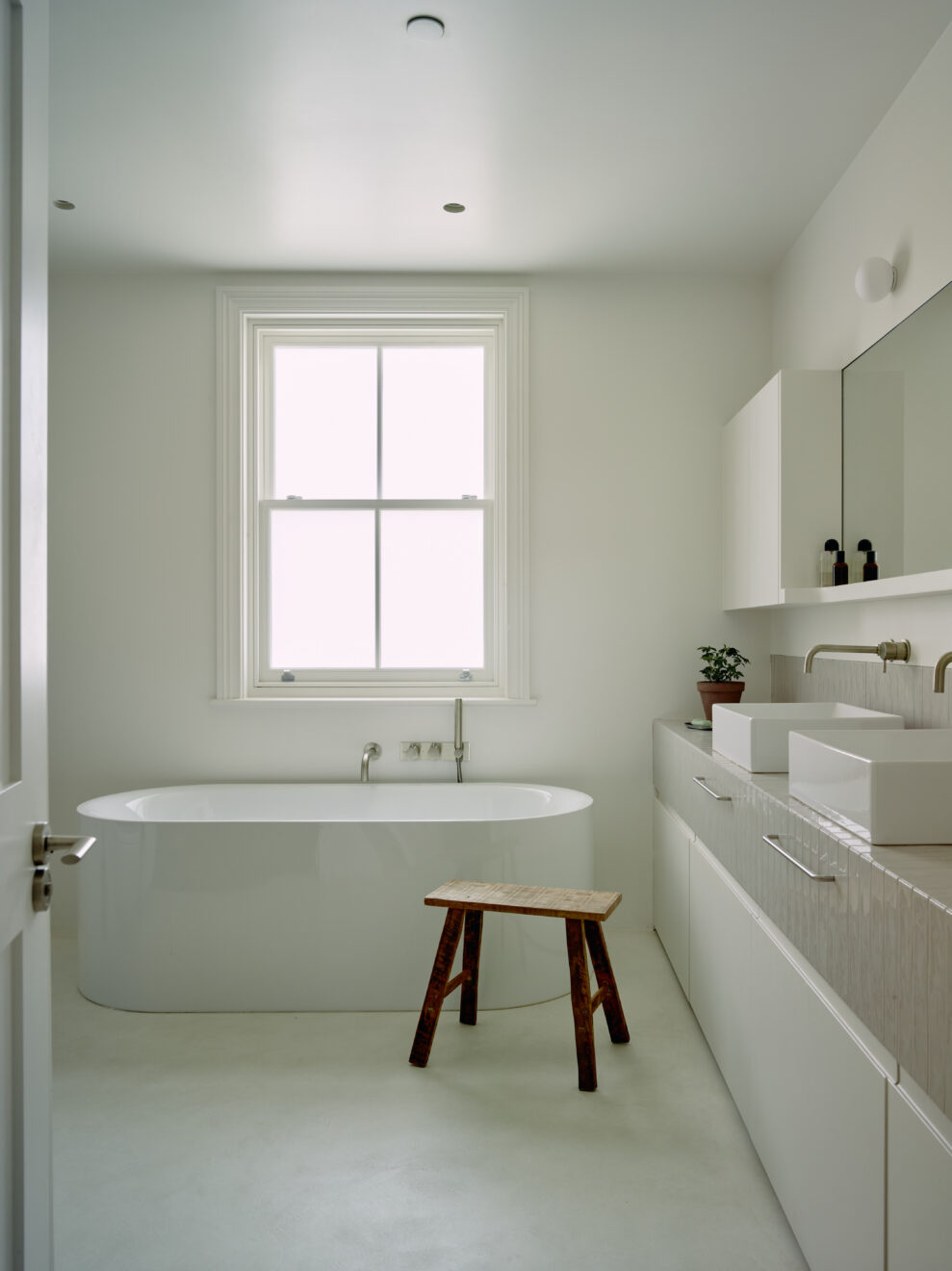
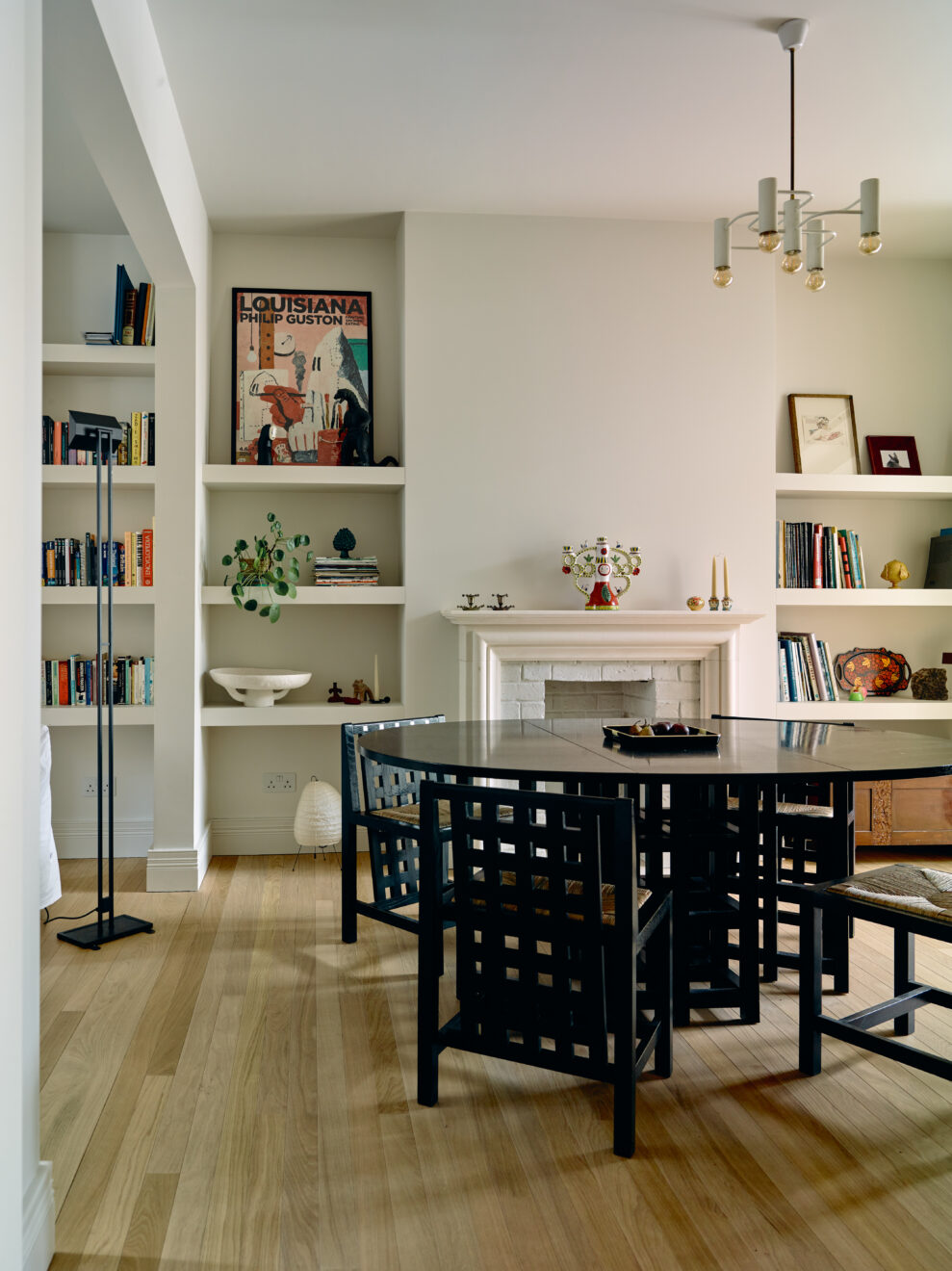
Daniel: I’d say the spatial layout always comes first, we think of that as the primary consideration. You have to get that right, but it’s not purely technical; there’s also an intuitive, instinctive sense of what might feel right, based on the context around you. Little ideas might creep in while you’re thinking about layout, but we don’t present material ideas to clients until the spatial arrangement is resolved.
Geri: We often work with common materials, but the key is how you detail them, how you play with them to create extra moments or subtle details.
Daniel: Exactly. You’re trying to do something not totally ordinary with ordinary materials. People are familiar with them, but by changing the arrangement, refining the details, or taking extra care with junctions, you can elevate the experience. That’s when we get quite detailed because all these small moments add up to how a space feels and the atmosphere you can create.
Geri: Our ethos is generally “less is more.” We focus on one material, using it sensitively. We might work with brick or stone, for example, and then elevate it slightly, tuning it to feel just a little more contemporary.
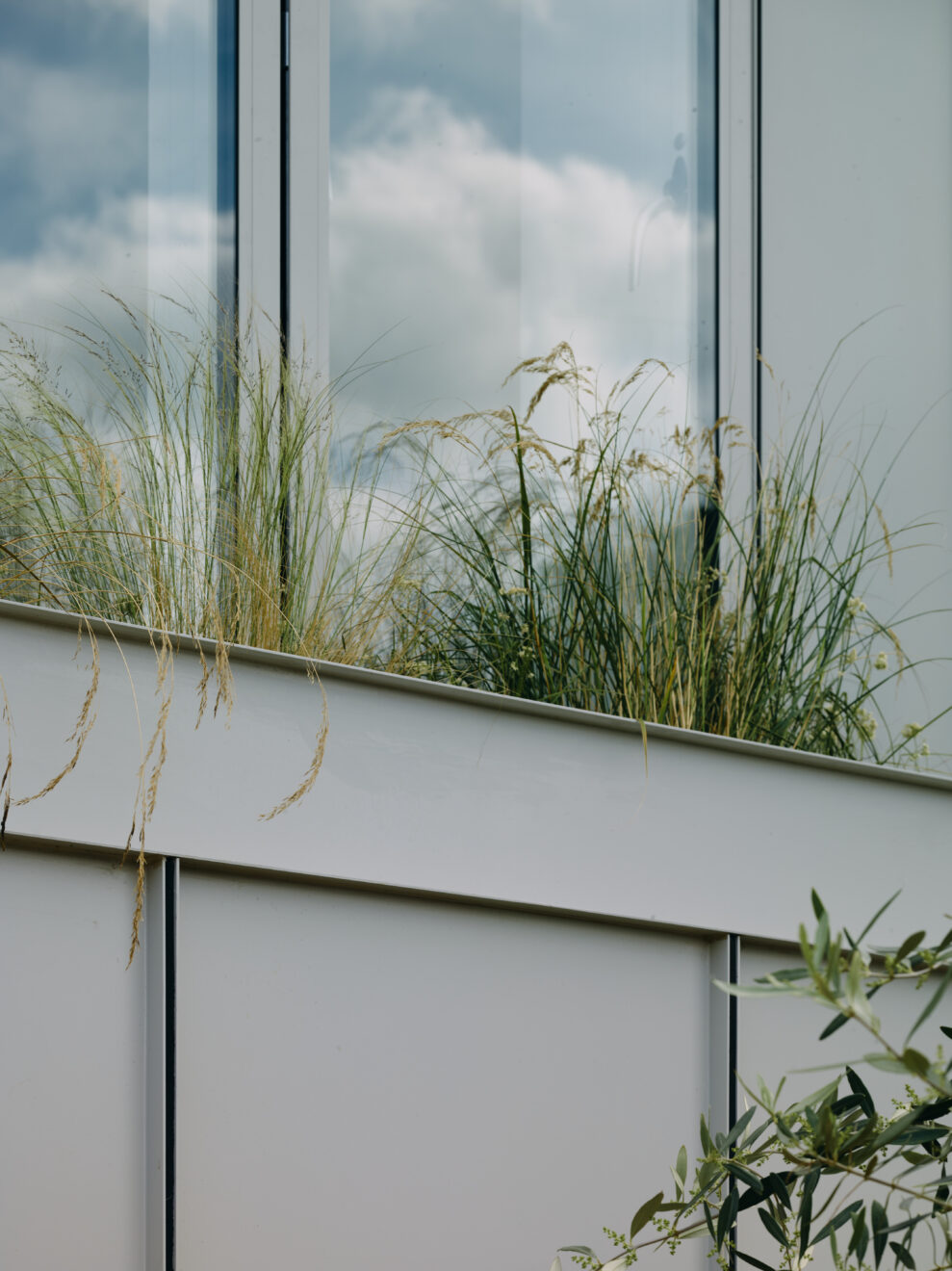
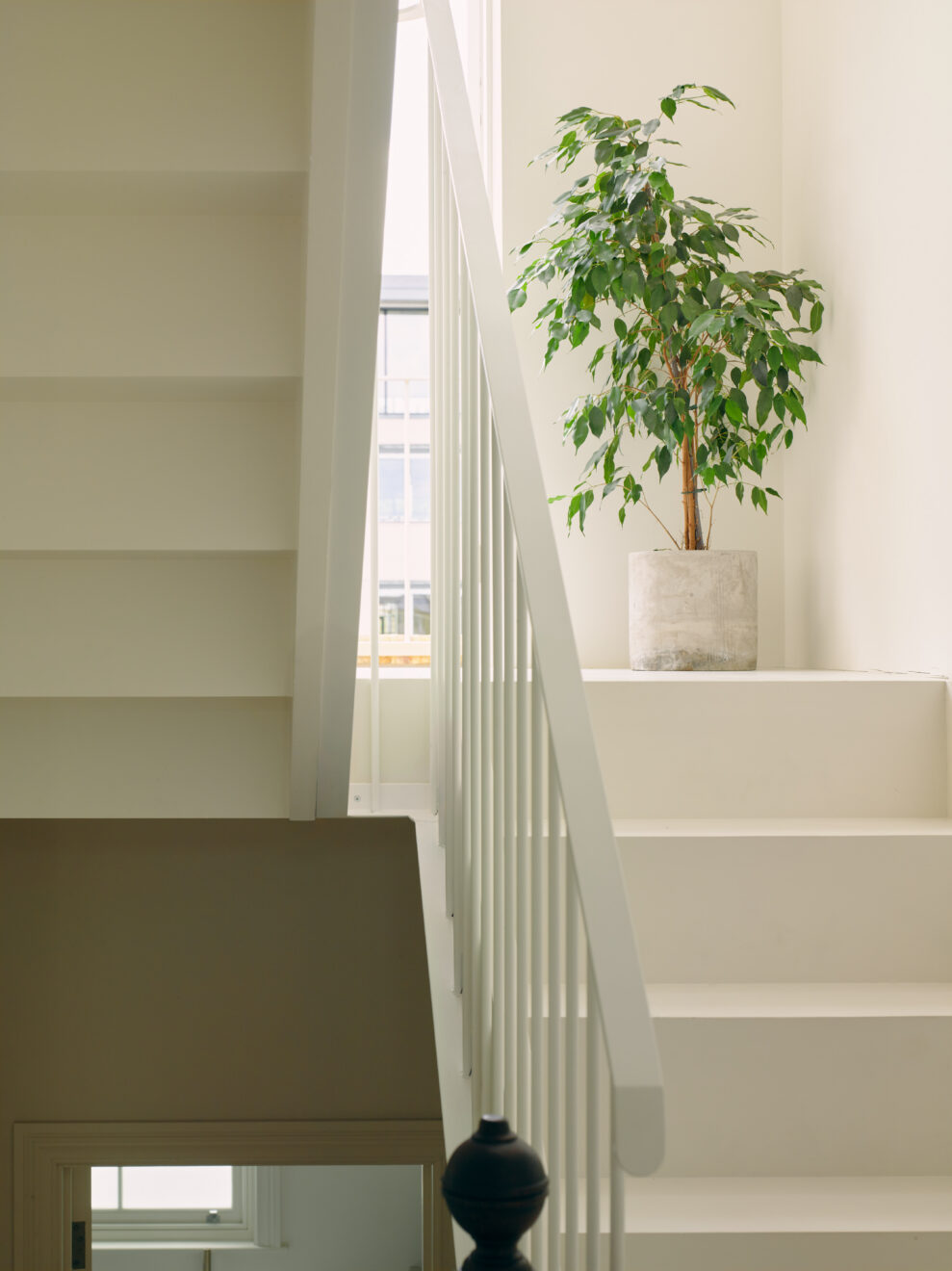
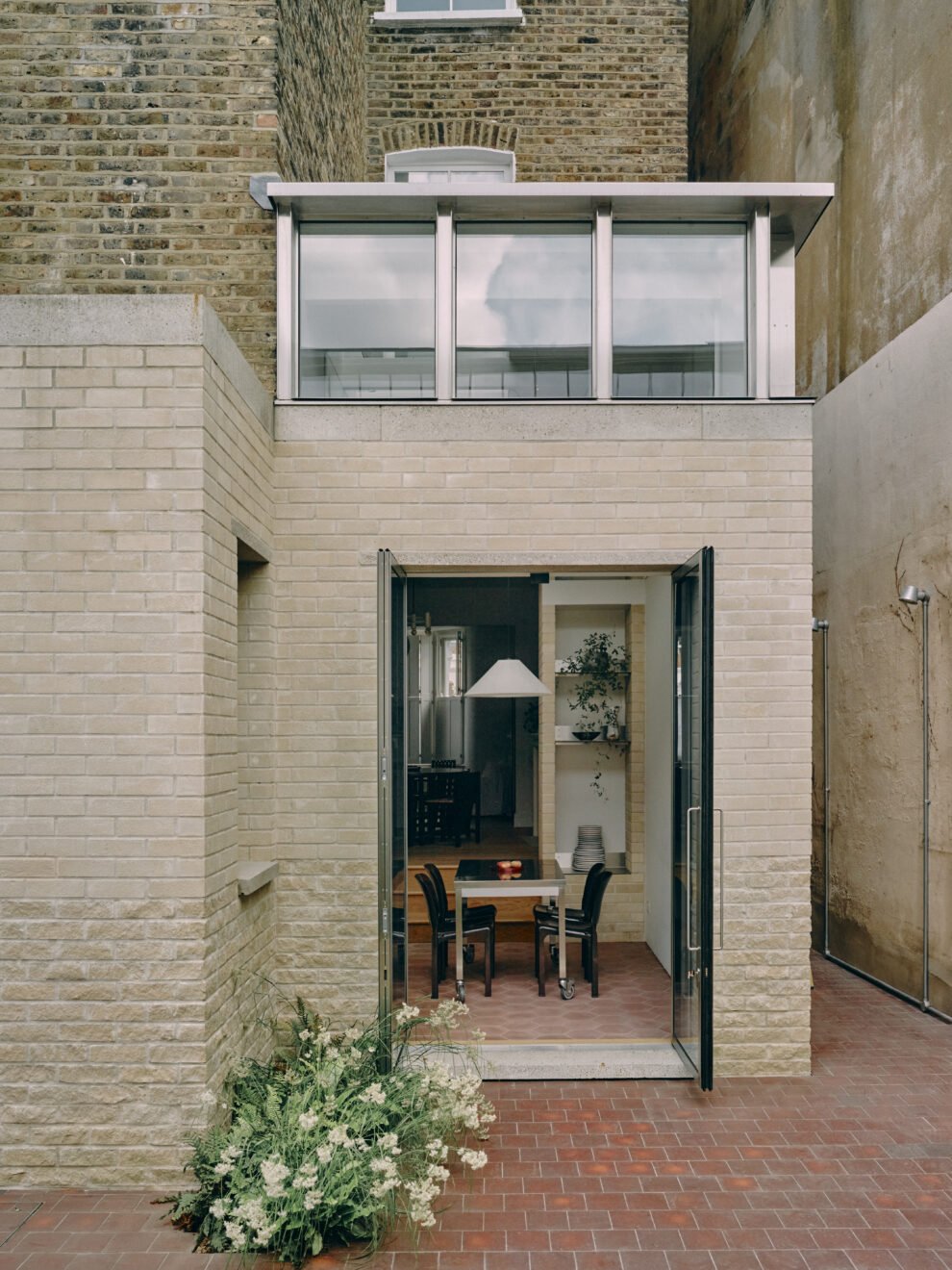
Geri: There are so many incredible materials available, but we like to keep the palette quite simple. In a way, the real innovation now is returning to traditional materials, like stone and brick, which is ironic, because it’s about bringing back older methods and ways of thinking as we become more aware of the impact of newer materials. That’s one of the reasons we chose stone brick for this project.
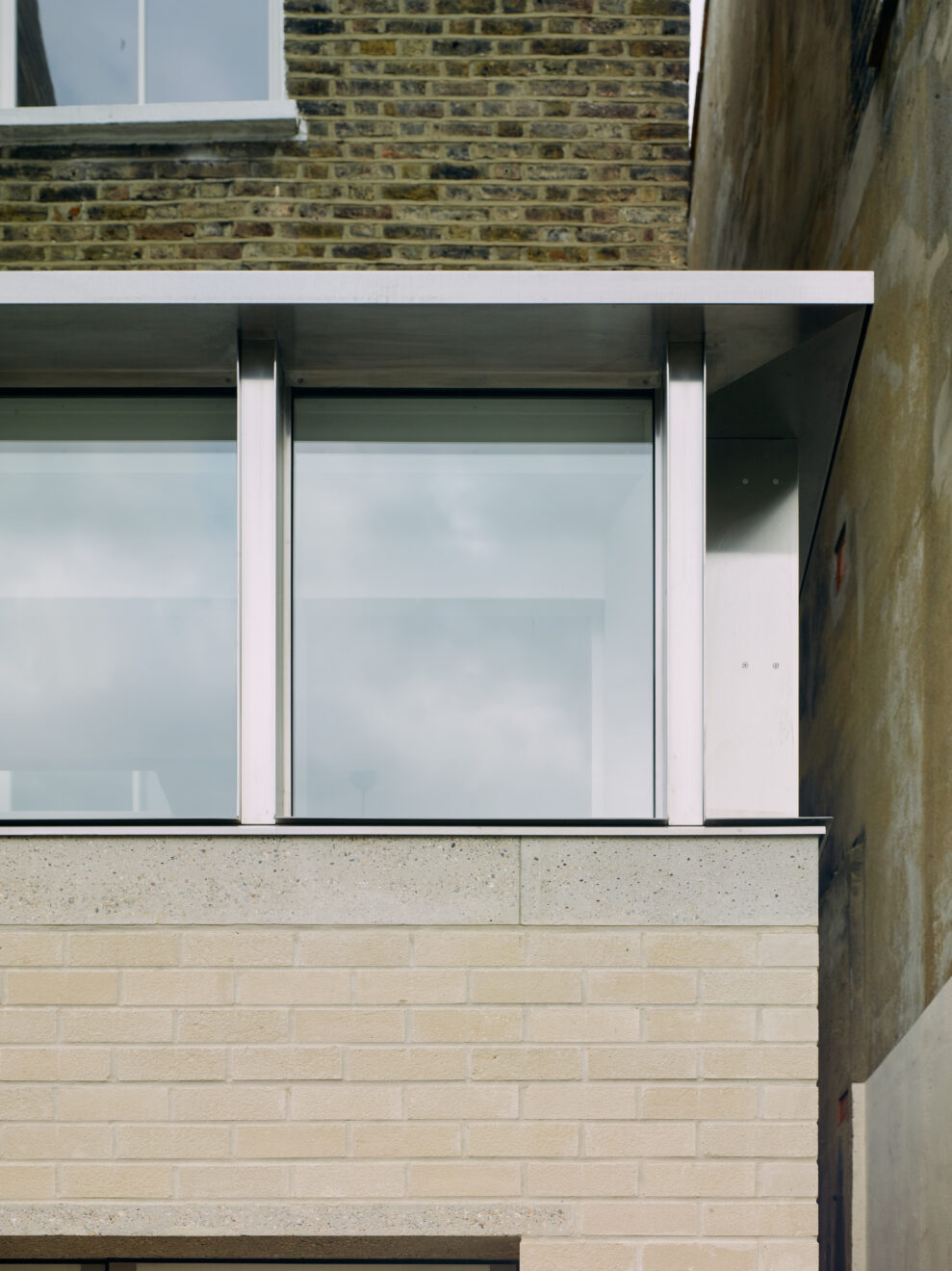
Daniel: Contrast was important as well. Because the house has such a strong vertical emphasis and very little outward space, we wanted the base to feel grounded and rooted in the earth. As you move up through the house, the materials become lighter and more refined, almost as if they’re moving closer to the sky.
Geri: That’s something we developed with Sarah, that the idea of heaviness at the bottom and lightness above.
Daniel: Originally, we had specified fairly standard brickwork with a lime render to create texture, but quite late in the process we switched to stone brick. It made more sense technically for the wall construction, and it also gave us the opportunity to use a split-face finish at the base, which created the rough, grounded quality we were looking for. It felt really appropriate.
Then the stainless steel provided a sharp contrast. Using stainless steel doors and openings emphasised the roughness of the stone; the contrast allows each material to bring out the essence of the other.
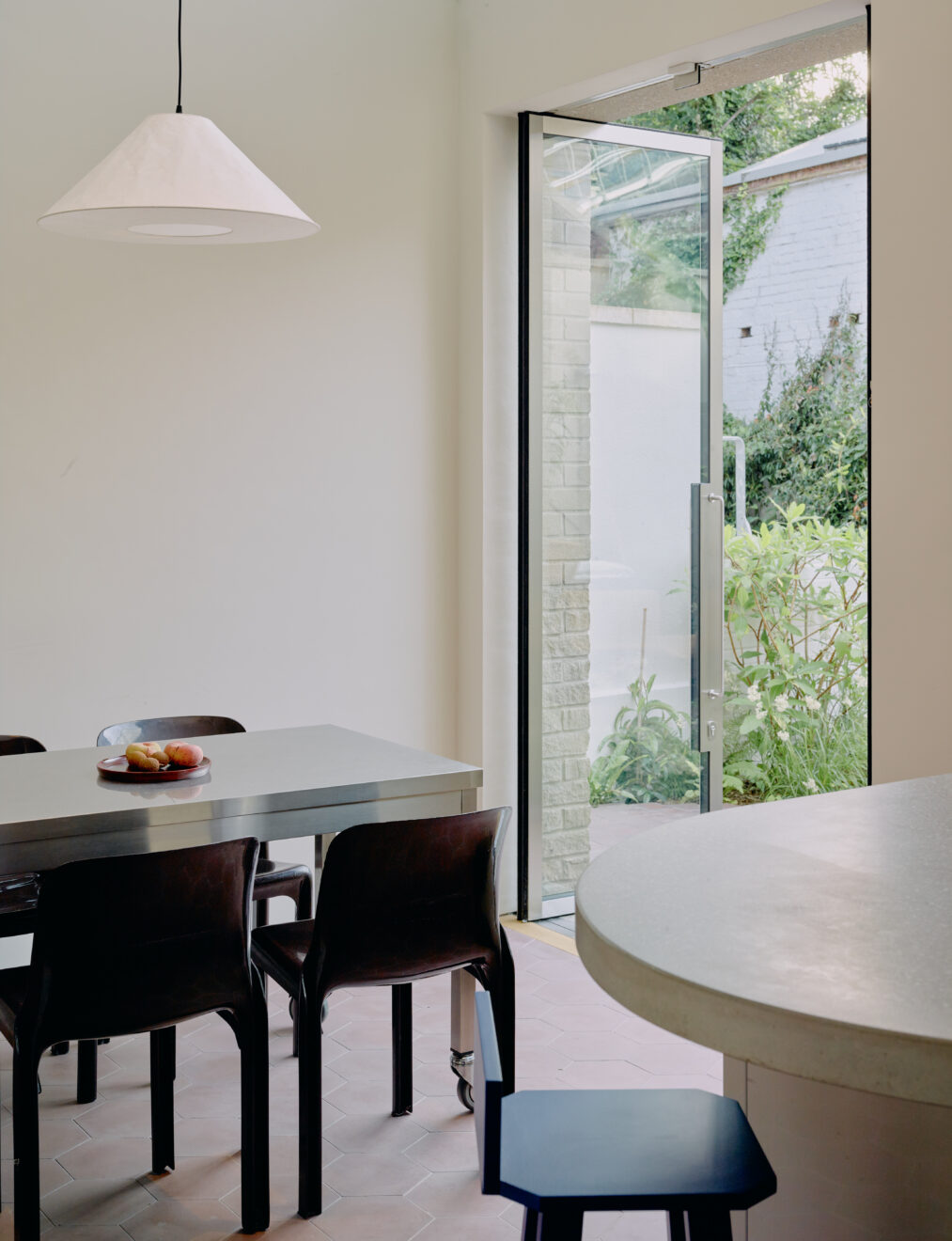
Daniel: The reason they’re more sustainable essentially is that there’s no firing process. With a clay brick, you have to use lots of energy to bake it and turn it into a brick. Whereas with stone, you just cut it out of the ground and it’s already formed. That’s what makes it so much better.
Geri: We were so fortunate to have clients who were fully on board and could see the benefits of using natural materials in construction.
Learn more about DGN here.